

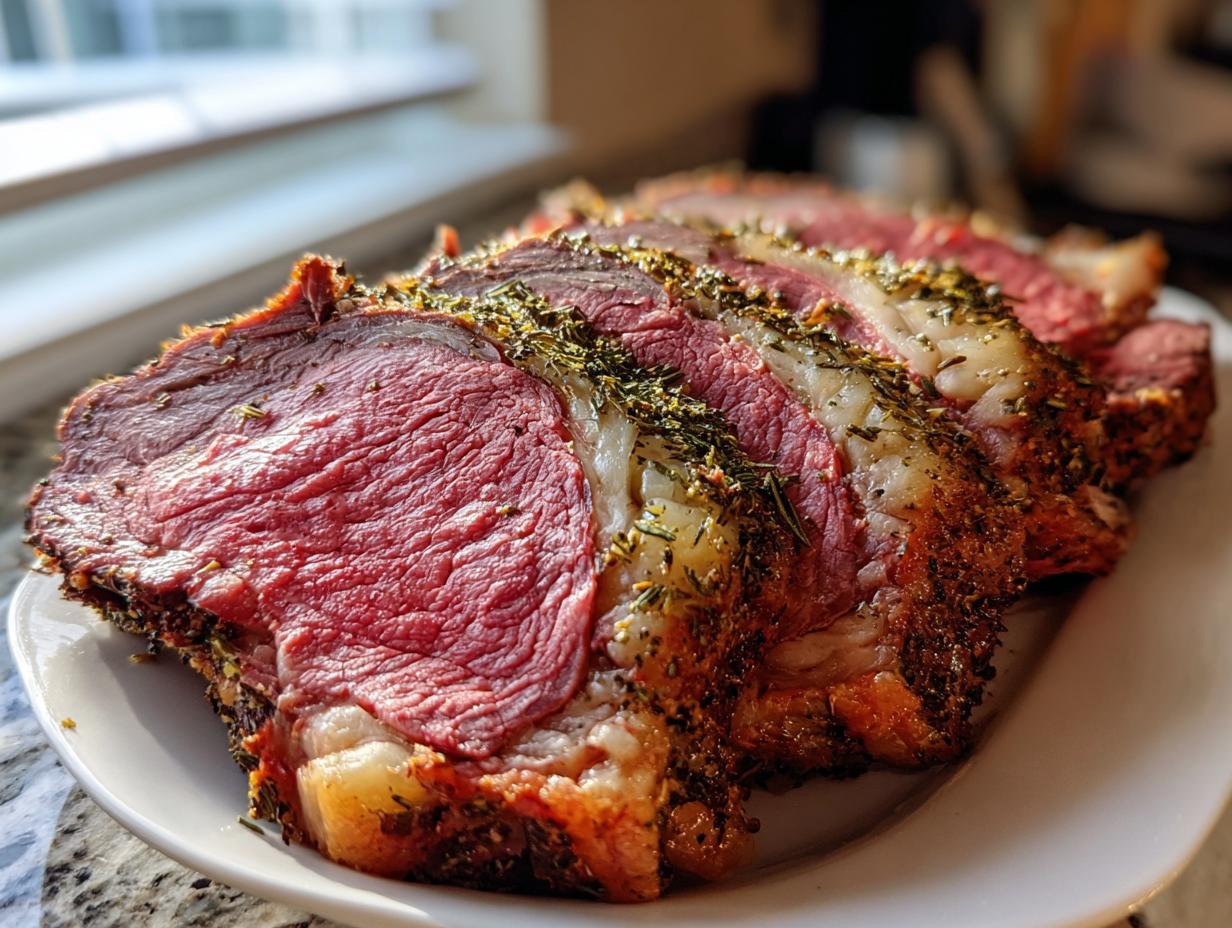
When it comes to a big holiday feast—whether it’s Christmas, Easter, or just a Sunday when you feel like pulling out all the stops—nothing screams ‘centerpiece’ like a glorious beef roast. But let’s be honest, prime rib always feels a little scary, right? That was exactly the feeling I wanted to conquer when I started Taste This Plate; we take those seemingly impossible classics and make them totally approachable. Forget stressing about dry meat!
I promise you, this foolproof **prime rib roast oven** method guarantees a juicy, tender interior every single time, topped with that savory, irresistible crust you dream about. We’re ditching the guesswork and getting straight to the technique that works. If you want to master your main course this year and serve beef that melts in your mouth, stick with me. You can find out a little more about our mission to simplify cooking classics on our About page, but for now, grab that beautiful cut of meat!
- Why This Prime Rib Roast Oven Recipe Delivers Tender Results
- Ingredients for Your Herb Crusted Prime Rib Roast Oven
- Step-by-Step How to Cook Prime Rib Medium Rare in the Oven
- Bone In Prime Rib Roast Instructions vs Boneless Prime Rib Roast Method
- Tips for Crispy Prime Rib Crust and Perfect Pan Drippings
- Serving Suggestions: Prime Rib Au Jus Recipe and Sides
- Storing Your Prime Rib Roast Oven Leftovers
- Frequently Asked Questions About Your Prime Rib Roast Oven
- Estimated Nutritional Data for This Oven Roasted Beef Recipe Special Occasion
- Share Your Perfect Prime Rib Christmas Dinner
- Estimated Nutritional Data for This Oven Roasted Beef Recipe Special Occasion
- Share Your Perfect Prime Rib Christmas Dinner
Why This Prime Rib Roast Oven Recipe Delivers Tender Results
So, why does this specific method work so well, especially if you want that perfect medium-rare? It really comes down to two major steps that ensure your **prime rib roast oven** experience isn’t stressful. We follow tested science here at Taste This Plate because I want you to feel confident serving this holiday star.
It’s all about heat control and timing. If you skip these things, you end up with gray rings and meat that’s tougher than it should be. Here are the secrets we use to guarantee tender, juicy results:
The Importance of Tempering the Prime Rib Roast Oven Cut
First up, patience! You absolutely must pull that beautiful roast out of the fridge about two to three hours before it hits the heat. This resting period, which we call tempering, lets the cold center warm up just a bit. If you skip this step with your **standing rib roast oven technique**, the outside will overcook while you wait for the middle to catch up. That’s how you get that dreaded gray band around the edges!
Achieving the Best Oven Roasted Prime Rib Temperature
This is where the magic happens and what makes this recipe foolproof. We use a two-stage blast of heat. We shock the roast at 500 degrees Fahrenheit for just 15 minutes. This high heat seals the juices in and gets that gorgeous, crispy herb crust going. Then, immediately, we drop the temperature down low to 325 degrees Fahrenheit until it hits your target doneness.
This contrast is key to the Best Oven Roasted Prime Rib Temperature outcome—a deep crust and a perfectly pink, tender center. Trust me on the temperature switch!
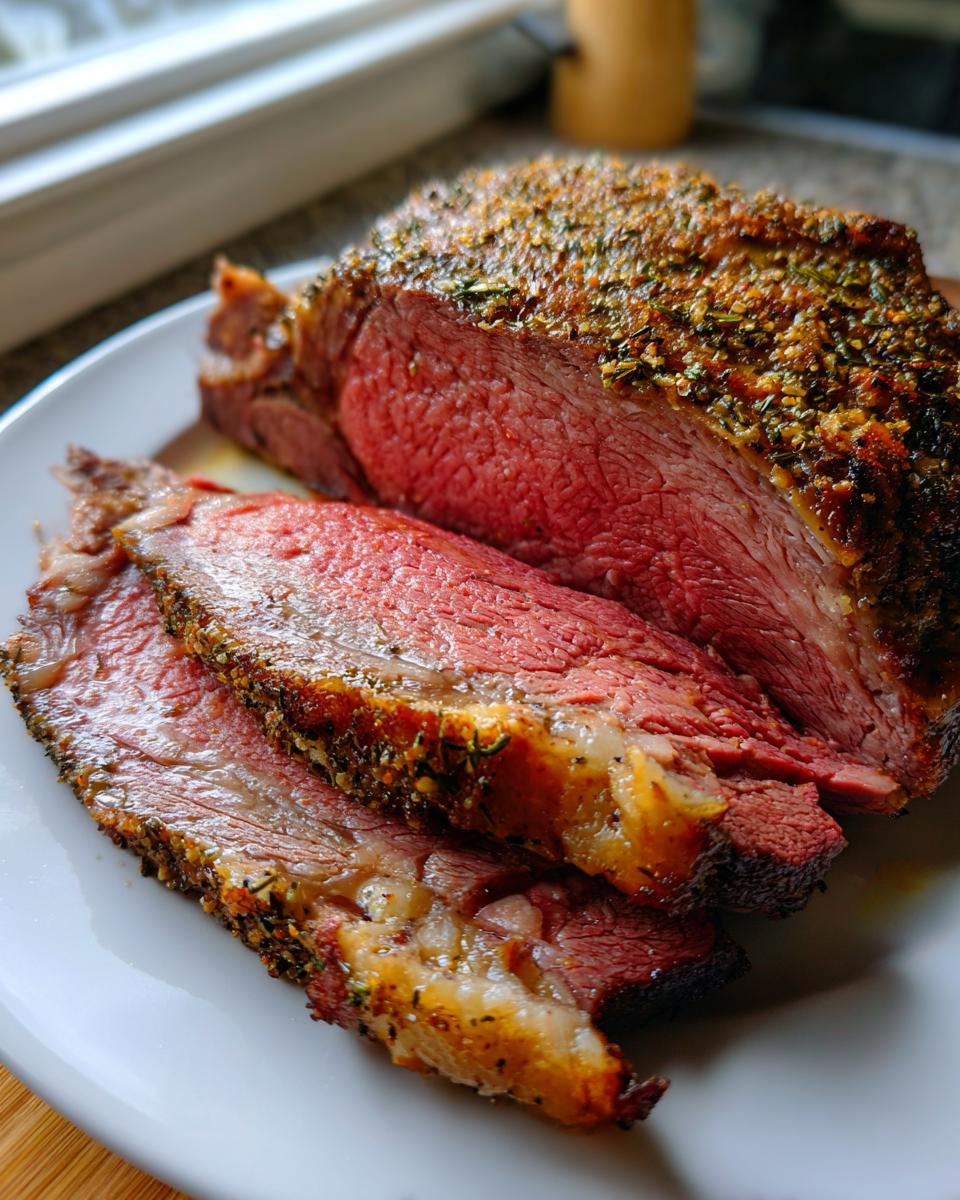
Ingredients for Your Herb Crusted Prime Rib Roast Oven
Okay, gathering your ingredients is almost as fun as the actual roasting, especially when you know these simple items are going to create something so spectacular. We aren’t using any weird stuff here—just good, accessible components that we’re going to transform into an amazing crust.
You’ll need a fantastic cut of beef, of course. Make sure you plan ahead! For this recipe, the quality of the fat and the flavor boosters really make a difference in the final appearance of your **herb crusted prime rib roast**.
- One (4-6 pound) bone-in or boneless prime rib roast (Standing Rib Roast works beautifully!)
- 4 tablespoons unsalted butter, and listen to me—it needs to be softened, not melted!
- 4 cloves garlic, minced very fine, please.
- 2 tablespoons fresh rosemary, chopped up nice and small.
- 1 tablespoon fresh thyme leaves (you can strip them right off the stem).
- 2 teaspoons kosher salt (we use kosher for better surface coverage).
- 1 teaspoon black pepper, freshly ground is best.
- 1 teaspoon onion powder
- 1 teaspoon garlic powder
- 1 tablespoon olive oil
The Essential Prime Rib Seasoning Rub
This rub is where we lock in all that savory goodness. Don’t be shy when you mix this up!
In a small bowl, just mash together that softened butter, your finely minced garlic, the chopped rosemary, and the thyme leaves. The reason we insist on fresh herbs here, even though dried is fine in a pinch, is the sheer aromatic punch they release when they hit that hot oven. Fresh rosemary smells like Christmas morning!
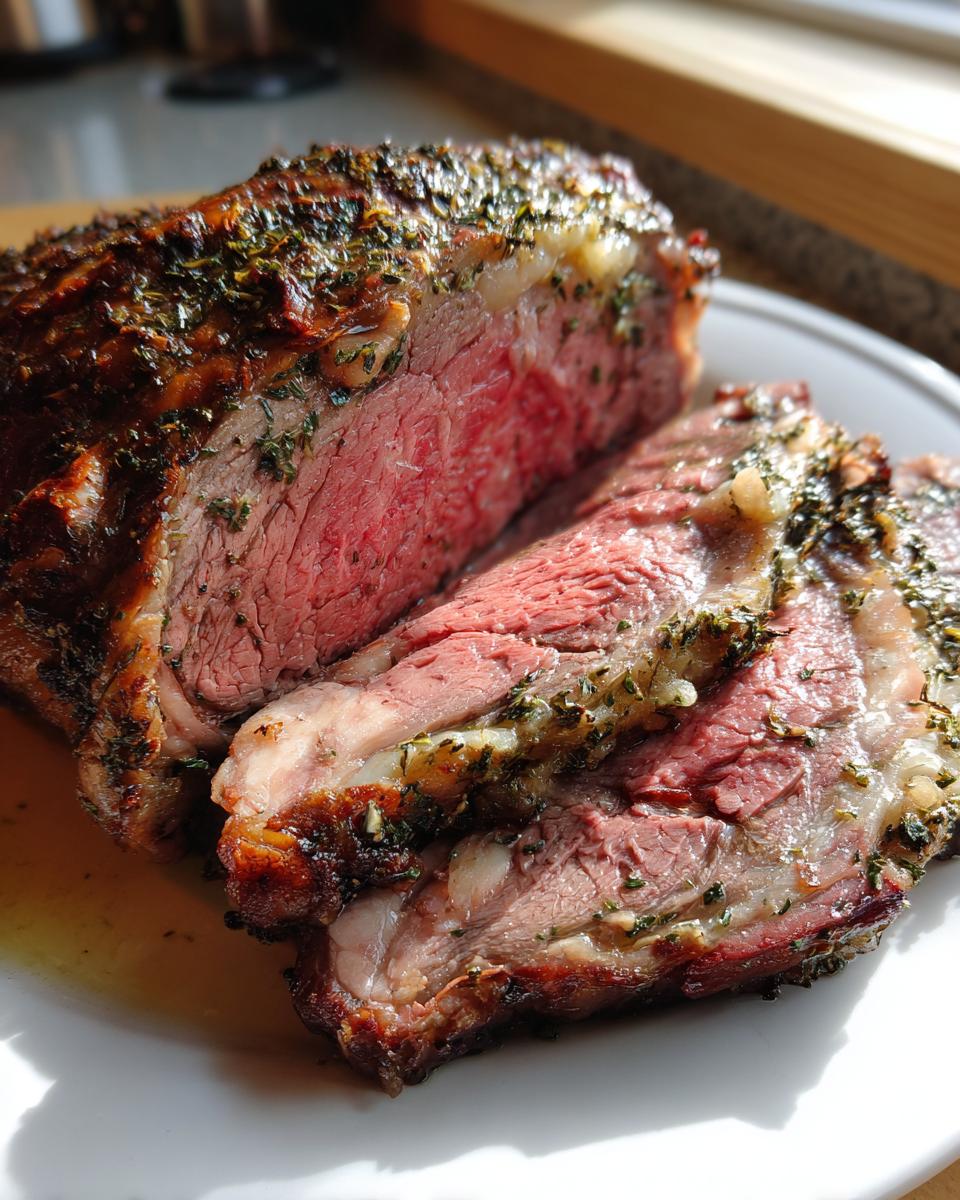
Once the butter base is mixed, sprinkle in your salt, pepper, onion powder, and garlic powder. Mix it until it looks like a wonderfully fragrant, slightly green paste. This is what you’ll be gently massaging all over your roast to ensure that beautiful, even crust develops during cooking.
Step-by-Step How to Cook Prime Rib Medium Rare in the Oven
This is it! The blueprint for the most incredible, stress-free roast you’ve ever made. Since we let the meat temper on the counter (remember that step?), we’re ready for the oven. Get your roasting pan with the rack set up—it needs to be ready to catch all those delicious drippings for your eventual Au Jus.
Follow these steps exactly, and you will achieve that famous, juicy result that makes this **prime rib roast oven** technique legendary. It’s easier than you think, I promise!
Seasoning and Preparing the Prime Rib Roast Oven
First, you must dry that meat! Take a stack of paper towels and blot the entire surface of your roast until it feels totally dry. Believe me, a dry surface is the secret weapon for getting that amazing, crispy exterior. Next, drizzle it lightly with the olive oil, just enough to help the rub stick.
Now grab that herb butter paste you made earlier. Use your hands—this is where you connect with the meat! Spread the rub evenly all over every single surface of the roast. Be generous! You want that thick layer of garlic and herbs coating everything. This is how we build the signature Herb Crusted Prime Rib Roast.
Crucial Meat Thermometer Guide Prime Rib
We start hot at 500°F for 15 minutes for that crust, but we don’t rely on time; we rely on temperature! You absolutely have to use a reliable meat thermometer here—this is the difference between a good roast and a perfect roast. Insert the probe into the absolute thickest part of the meat, making sure you don’t touch the bone underneath if you have a bone-in cut.
Once the oven drops to 325°F, start checking your internal temperature. For that classic medium-rare that everyone raves about in a **prime rib roast oven** scenario, you need to pull that roast out when the thermometer reads 125 to 130 degrees Fahrenheit. Pull it early, because it keeps cooking!
The Essential Resting Period for a Juicy Prime Rib Recipe Easy
Do not carve it immediately! Seriously, this is the hardest part because it smells so good, but you must let it rest. Take the roast out, tent it loosely with foil—and I mean *loosely*, don’t wrap it tight or you’ll steam that beautiful crust—and leave it alone for a minimum of 20 minutes. This resting allows the juices, which have been pushed toward the center by the heat, to redistribute throughout the meat. That process is called carryover cooking, and it’s what guarantees a truly **Juicy Prime Rib Recipe Easy** experience.
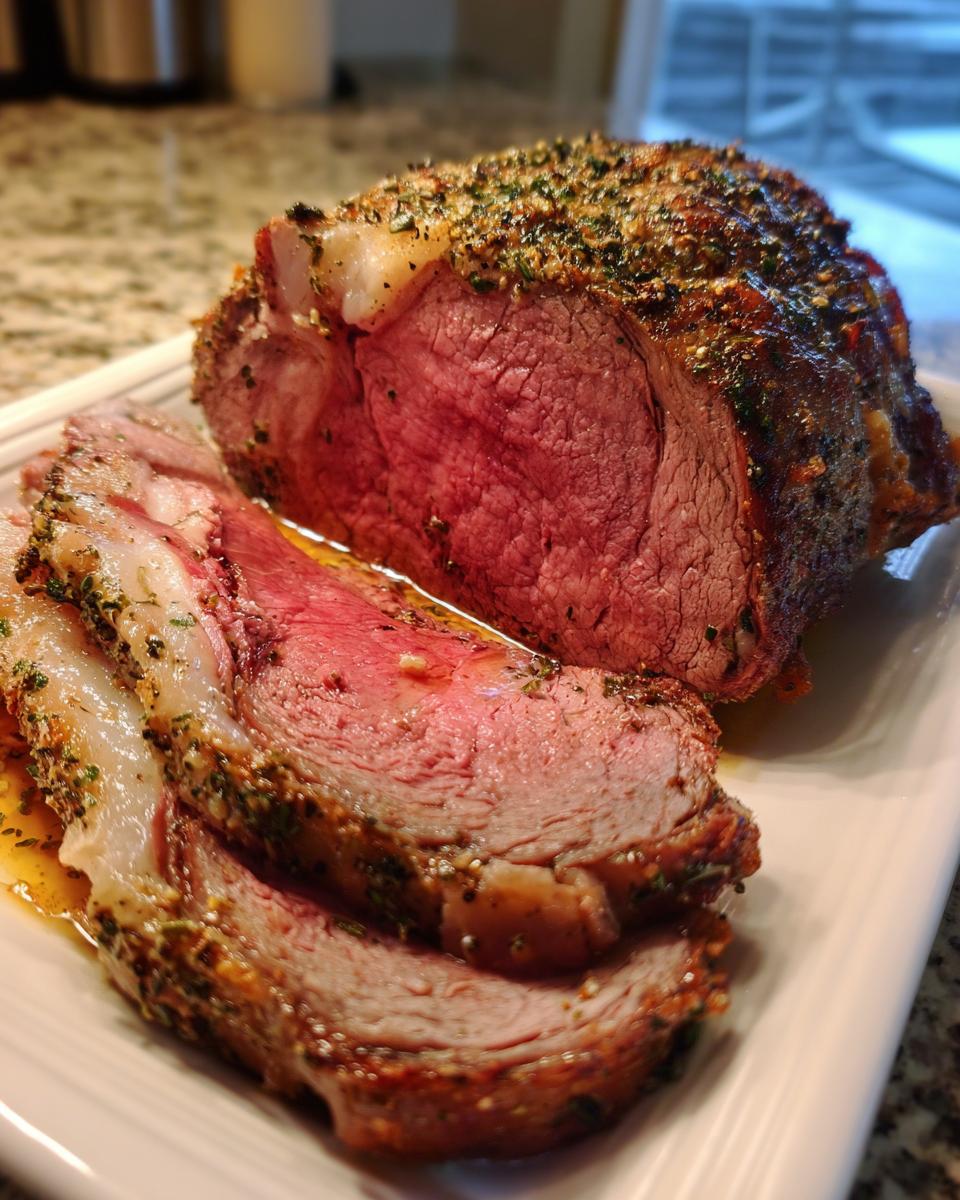
Bone In Prime Rib Roast Instructions vs Boneless Prime Rib Roast Method
When you’re talking **bone in prime rib roast instructions**, people often wonder if they need a totally different recipe than if they bought a boneless roast. The short answer is, not really! That’s the beauty of this universal **oven roasted prime rib temperature** technique we’re using.
The biggest difference you’ll notice when you’re following the **Boneless Prime Rib Roast Method** at home is the timing. The bone acts like a little insulator, which means that bone-in rib roasts generally take a bit longer to reach that perfect internal temperature compared to a boneless cut of the exact same weight.
If you look at the cooking time estimations, always err on the side of caution with bone-in. I usually add about 15 to 25 minutes depending on how large the roast is. You absolutely still start hot at 500 degrees for the sear though—that’s non-negotiable for the crust!
When placing it in the roasting pan, if you have a bone-in cut, try to place the bones down on the rack first. It gives the roast a little natural elevation, which helps the heat circulate evenly underneath. If you have a boneless piece, you might want to tie it up with some kitchen twine to keep its shape nice and compact while it roasts. It just helps everything cook that much more consistently!
For pairing the final technique, remember that whether you’ve got the bones or not, checking that temperature correctly is the most crucial part of the whole **tender beef roast recipe**. You can read more about pairing this fantastic roast with a side like my pasta if you want something simple later on!
Tips for Crispy Prime Rib Crust and Perfect Pan Drippings
We’ve got the medium-rare interior nailed down, so now let’s talk about texture on the outside because nobody wants a floppy crust on their **prime rib roast oven** masterpiece. Luckily, that initial 15-minute blast at 500 degrees is doing most of the heavy lifting for us!
But if you want that extra crunch—that little bit of shatter when you slice into it—I have a couple of tricks up my sleeve that come right from the notes section. This is about getting that beautiful contrast in your **tender beef roast recipe**.
First, make sure you are patting that roast bone-dry before you apply the oil and the herb butter rub. Moisture is the enemy of crispiness! If the surface is wet, it steams instead of sears, and we are definitely not making steamed beef here.
Now, after you’ve rested the roast for those crucial 20 minutes, if you look at the outside and think, “Hmm, I want a little more color,” you have an option. Carefully tent it back up with aluminum foil, but this time, stick it back into a hot oven—crank it up to 400 degrees Fahrenheit.
Let it sit in the 400-degree oven, completely uncovered, for just about 5 to 10 minutes. Watch it closely! This little “final crisp” step really sets the exterior beautifully without overcooking the inside, which is already resting and firming up. You can see how other folks approach this on this recipe, but I find that short blast at the end does the trick perfectly for my **prime rib roast oven method**.
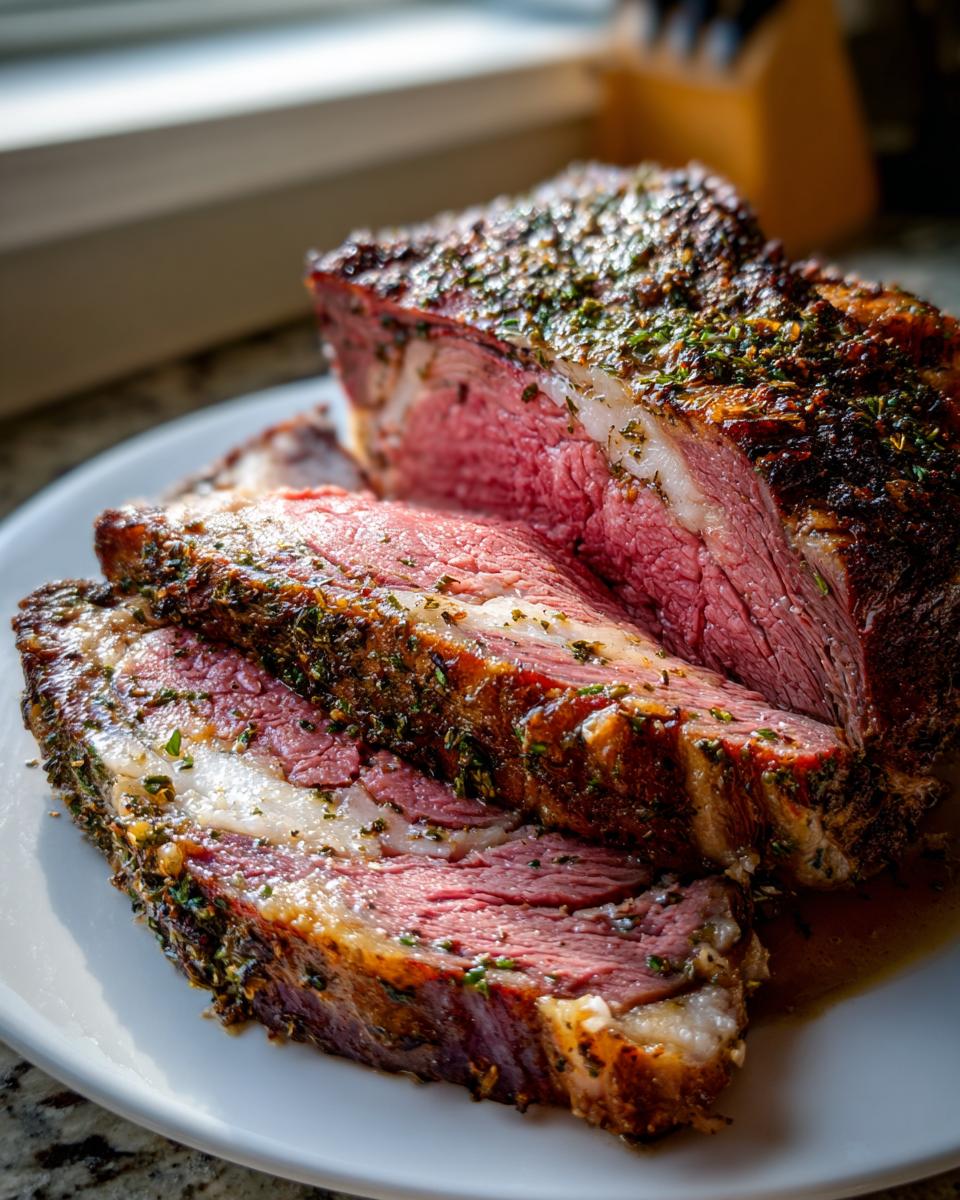
As for those pan drippings? Don’t waste a single bit! Once you pull the roast out, pour those flavorful juices and rendered fat into a fat separator or skim the fat off the top of a measuring cup. Those are the foundation of the best Au Jus you’ll ever have—they are pure beef gold!
Serving Suggestions: Prime Rib Au Jus Recipe and Sides
You’ve done the hard part! Your **showstopper beef roast holiday** meal is resting beautifully, filling your house with the most incredible savory smell. Now we talk about what to serve alongside it to make the entire plate sing. You can’t serve a roast this magnificent without the right accompaniment, right?
First and foremost, we have to talk about those drippings we saved from the pan. We are making a quick, simple Au Jus right there on the stovetop. You don’t need a fancy packet or hours simmering bones for this—we already did the hard work!
Just take your saved drippings (skim off most of that surface fat, though leave a little for flavor!) and put the pan over medium heat on your stovetop. Pour in about two cups of good quality beef broth. Scrape up all those dark, flavorful browned bits stuck to the bottom—that scraping is called *deglazing*, and it’s where all the deep flavor lives!
Let that simmer really gently for about 10 minutes, stirring occasionally, just enough to reduce it a tiny bit and let the flavors marry. Taste it! If it needs salt, add a pinch. If it’s too thick, add a splash more broth. Honestly, this simple **Prime Au Jus Recipe** is way better than anything from a jar because it tastes exactly like your beef.
The Perfect Side Dish Pairing
For me, when I make a big, rich roast like this, I need something that offers a contrasting texture—something crispy and salty to scoop up all that Au Jus. You can go fancy with mashed potatoes, but if you want something with a little more zing to cut through the richness of the beef, you have to try my crispy potato wedges. They roast up beautifully alongside the roast (just watch your timing!) and they are fantastic dunked right into the meat juices.
If you prefer something creamy to balance the intensely savory nature of the beef, you absolutely cannot go wrong with homemade creamy horseradish sauce. Just mix together fresh grated horseradish (if you can handle the fumes!), sour cream or crème fraîche, a little splash of vinegar, and salt and pepper. It adds a refreshing, sharp bite that cuts through the richness perfectly. Whatever you choose, serve it hot and enjoy the applause!
Storing Your Prime Rib Roast Oven Leftovers
Oh, the leftovers! Sometimes the second day is even better, especially if you manage to snag a slice that already has some of that amazing herb crust. But we need to treat this leftover meat right, otherwise that beautiful medium-rare texture we worked so hard for can turn dry and sad quickly. This is key for any **prime rib roast oven** leftover!
The main rule here is moisture retention. Beef likes to dry out when it’s chilled and sitting around, so we need to protect it. Cut up any remaining roast into manageable slices—it’s easier to reheat individual portions than trying to slice a cold chunk later.
For storage, put the meat into a really airtight container. If you don’t have one, heavy-duty plastic wrap works, but wrap it tightly! You want to minimize its exposure to the cold, dry air in your fridge. Properly stored, leftover prime rib should last beautifully for about three to four days.
The Best Way to Reheat Prime Rib for Moisture
Nobody wants reheated roast beef that tastes like shoe leather, so we are avoiding the microwave whenever possible. If you must use one, use very low power and only for short bursts, but honestly, take the few extra minutes to do this right. The stovetop or oven is where we get tender results.
For the best experience with your leftover **oven roasted prime rib**, try this gentle heat method. Place the slices into an oven-safe dish. Pour a little bit of liquid into the bottom of that dish—this can be saved Au Jus, plain beef broth, or even just a splash of water. You only need about a quarter-inch of liquid, just enough to create steam in the oven!
Cover that dish very tightly with aluminum foil. You are essentially making a mini-steam bath for your beef. Pop it into a low oven—about 275 degrees Fahrenheit—and let it warm up slowly. It usually takes about 10 to 15 minutes, depending on how thick your slices are.
Using Leftover Prime Rib in New Ways
Let’s be real, a piece of leftover roast beef deserves a second life beyond just being served alongside potatoes again! If you happen to have a ton left over, it’s fantastic repurposed, which is a great way to use up the last bits after your **special occasion beef roast** is done.
I love slicing it thin and using it for amazing French Dip sandwiches. Just warm it up as described above, pile it high on a crusty roll, and serve it with a little extra Au Jus for dipping. It’s incredible!
Another favorite is tossing those thin slices into hash for breakfast the next morning, mixing it with some diced onions, bell peppers, and maybe a fried egg right on top. It turns a fancy holiday dinner into a totally satisfying, simple meal the next day. Don’t let those lovely leftovers go to waste!
Frequently Asked Questions About Your Prime Rib Roast Oven
Whenever I host a big dinner, I always get the same flood of texts asking about timing and temperature, so I figured we should nail down the FAQs right here. Dealing with a large, expensive cut like prime rib can feel high-stakes, but once you know the rules for your **prime rib roast oven**, it’s smooth sailing. Don’t hesitate to ask if you have other thoughts; sometimes the best tips come from you all!
What is the correct Low and Slow Prime Rib Roast Oven time?
That’s such a good question because you see the “low and slow” method talked about everywhere! That method involves roasting at a very low temperature—like 225°F—for most of the cooking time. Now, that method is fantastic if you want absolutely zero temperature gradient, meaning the meat is perfectly pink from edge to edge. However, we prefer that high-heat sear step up front for our **Oven Roasted Beef Recipe Special Occasion**.
Why? Honestly, it’s all about the crust! That blast of 500 degrees is what creates that thick, savory, crispy exterior that makes a great **Herb Crusted Prime Rib Roast**. The low-and-slow technique doesn’t develop that aggressive crust as effectively. So, while low-and-slow gives you edge-to-edge pinkness, our method gives you the best flavor contrast between the crust and the interior.
Can I use a bone-out roast for this prime rib roast oven technique?
Yes, absolutely! So many people find the **boneless prime rib roast method** easier to handle or more practical if they are feeding a slightly smaller crowd. You can definitely use whatever cut your butcher has for you!
The main advisory when using a boneless cut using this very specific **prime rib roast oven technique** is simply to reduce your cooking time slightly, maybe by 10 to 20 minutes total, depending on weight. Since there’s no bone structure insulating the meat, the heat penetrates faster. Keep that meat thermometer handy, and pull it once it hits that 125-130°F mark for medium-rare. You still want to follow the 500-degree sear first, though! If you are looking for more detailed tips on variations, I saw some great guides on Olivia’s Kitchen.
We stick to the essential steps like alternating our wet and dry ingredients even when making a side dish later, and the same care applies to the temperature when roasting the beef!
Estimated Nutritional Data for This Oven Roasted Beef Recipe Special Occasion
Now, I know when you’re making a **holiday main dish beef** roast this size, you might be curious about the nutrition info, but please remember what I always say: these figures are estimates based on the ingredients listed for that 4-6 pound roast cooked precisely as directed.
This data is calculated based on 5-ounce servings of the cooked meat only, not including any Au Jus or side dishes. You’re cooking a special occasion meal, so we don’t worry too much about the macros, but it’s good to have an idea!
- Serving Size: 5 oz cooked meat
- Calories: 350
- Sugar: 0
- Sodium: 350
- Fat: 25
- Saturated Fat: 10
- Unsaturated Fat: 15
- Trans Fat: 0
- Carbohydrates: 1
- Fiber: 0
- Protein: 30
- Cholesterol: 100
This is a really satisfying, high-protein centerpiece, perfect for a relaxed holiday gathering!
Share Your Perfect Prime Rib Christmas Dinner
If you followed these steps and now your kitchen smells like the world’s best steakhouse, I want to hear about it! There is nothing I love more than knowing this **prime rib roast oven** method helped make your **Perfect Prime Rib Christmas Dinner** truly unforgettable.
Did your crust get extra crispy? Did everyone ask for seconds? Please drop a rating and a comment below—it helps other cooks know that this recipe delivers on its promise of a tender, juicy roast. And if you snap a picture of that amazing medium-rare slice, please tag us! You can always reach out directly through my contact page if you have a super specific question I didn’t cover here.
Happy roasting, friends!
Estimated Nutritional Data for This Oven Roasted Beef Recipe Special Occasion
Now, I know when you’re making a **holiday main dish beef** roast this size, you might be curious about the nutrition info, but please remember what I always say: these figures are estimates based on the ingredients listed for that 4-6 pound roast cooked precisely as directed.
This data is calculated based on 5-ounce servings of the cooked meat only, not including any Au Jus or side dishes. You’re cooking a special occasion meal, so we don’t worry too much about the macros, but it’s good to have an idea!
- Serving Size: 5 oz cooked meat
- Calories: 350
- Sugar: 0
- Sodium: 350
- Fat: 25
- Saturated Fat: 10
- Unsaturated Fat: 15
- Trans Fat: 0
- Carbohydrates: 1
- Fiber: 0
- Protein: 30
- Cholesterol: 100
This is a really satisfying, high-protein centerpiece, perfect for a relaxed holiday gathering!
Share Your Perfect Prime Rib Christmas Dinner
If you followed these steps and now your kitchen smells like the world’s best steakhouse, I want to hear about it! There is nothing I love more than knowing this **prime rib roast oven** method helped make your **Perfect Prime Rib Christmas Dinner** truly unforgettable.
Did your crust get extra crispy? Did everyone ask for seconds? Please drop a rating and a comment below—it helps other cooks know that this recipe delivers on its promise of a tender, juicy roast. And if you snap a picture of that amazing medium-rare slice, please tag us! You can always reach out directly through my contact page if you have a super specific question I didn’t cover here.
Happy roasting, friends!
PrintFoolproof Oven-Roasted Prime Rib with Herb Butter Rub
Make a show-stopping, juicy, and tender prime rib roast in your oven. This recipe uses a simple herb butter rub and a specific temperature method to achieve a perfect medium-rare with a savory crust.
- Prep Time: 20 min
- Cook Time: 2 hr 30 min
- Total Time: 3 hr 50 min
- Yield: 6-8 servings 1x
- Category: Main Course
- Method: Oven Roasting
- Cuisine: American
- Diet: Low Calorie
Ingredients
- 1 (4-6 pound) bone-in or boneless prime rib roast (standing rib roast)
- 4 tablespoons unsalted butter, softened
- 4 cloves garlic, minced
- 2 tablespoons fresh rosemary, chopped
- 1 tablespoon fresh thyme leaves
- 2 teaspoons kosher salt
- 1 teaspoon black pepper
- 1 teaspoon onion powder
- 1 teaspoon garlic powder
- 1 tablespoon olive oil
Instructions
- Remove the prime rib roast from the refrigerator 2 to 3 hours before cooking to allow it to come close to room temperature.
- Preheat your oven to 500 degrees Fahrenheit. Place a roasting rack inside a sturdy roasting pan.
- In a small bowl, combine the softened butter, minced garlic, rosemary, thyme, kosher salt, pepper, onion powder, and garlic powder to create the herb butter rub.
- Pat the entire surface of the roast dry with paper towels. Rub the olive oil evenly over the roast.
- Spread the herb butter rub all over the exterior of the roast, pressing it gently into the meat.
- Place the seasoned roast, fat side up, on the roasting rack in the pan.
- Roast at 500 degrees Fahrenheit for 15 minutes. This high heat helps create a crispy crust.
- Reduce the oven temperature to 325 degrees Fahrenheit. Continue roasting until the internal temperature reaches your desired doneness (see temperature guide below). Do not open the oven door during this phase unless necessary.
- Use a reliable meat thermometer inserted into the thickest part of the roast, avoiding bone. For medium-rare, pull the roast when the temperature reads 125 to 130 degrees Fahrenheit.
- Remove the roast from the oven. Tent it loosely with foil and let it rest for at least 20 minutes before carving. The internal temperature will rise during resting.
- Slice against the grain and serve immediately with pan drippings or horseradish sauce.
Notes
- For bone-in roasts, the cooking time will be slightly longer than for boneless cuts of the same weight.
- If you prefer a crispier crust, you can return the roast to a 400 degree Fahrenheit oven for 5-10 minutes after resting, uncovered.
- Use the drippings from the roasting pan to make a simple Au Jus by skimming excess fat and simmering the remaining liquid with beef broth on the stovetop.
Nutrition
- Serving Size: 5 oz cooked meat
- Calories: 350
- Sugar: 0
- Sodium: 350
- Fat: 25
- Saturated Fat: 10
- Unsaturated Fat: 15
- Trans Fat: 0
- Carbohydrates: 1
- Fiber: 0
- Protein: 30
- Cholesterol: 100