

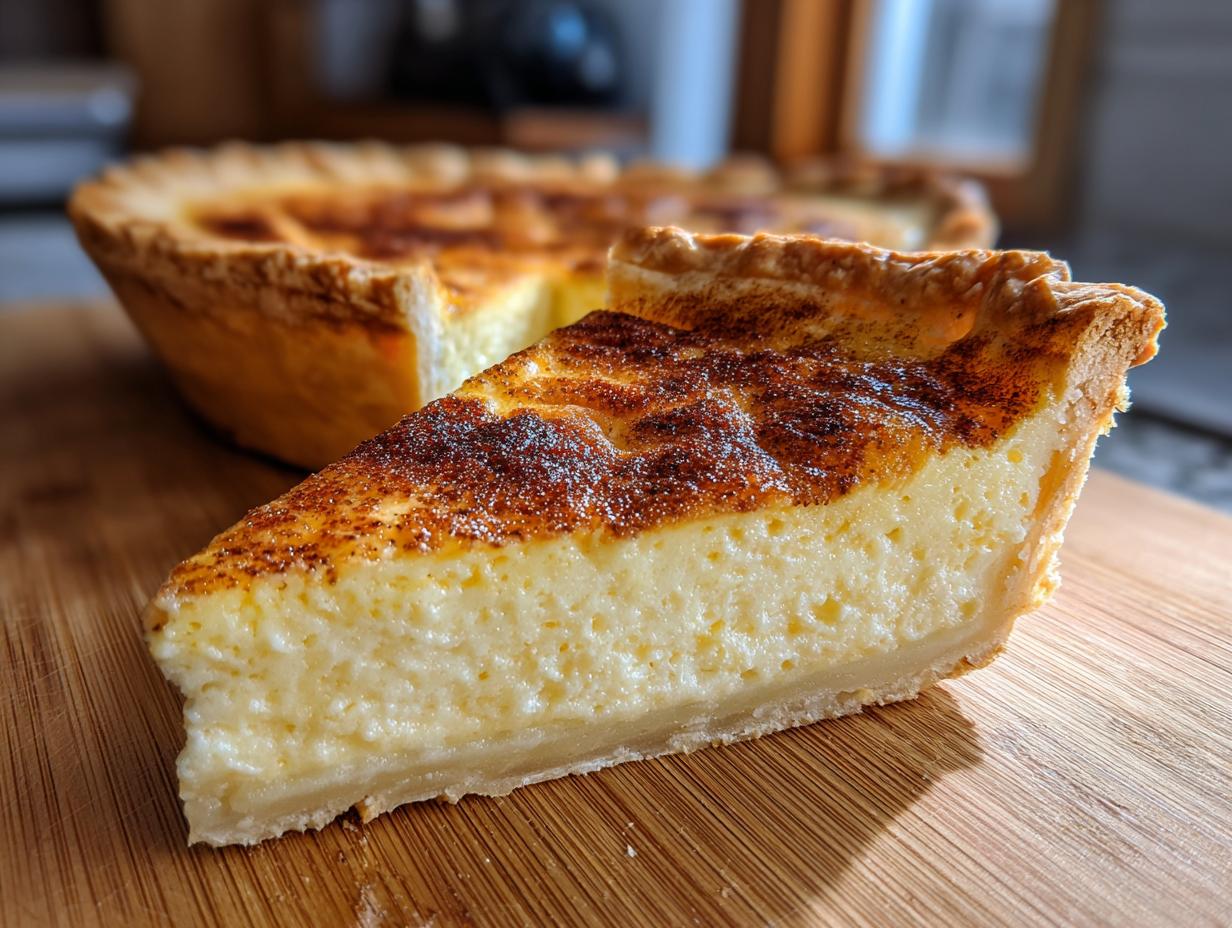
When the day calls for something truly comforting, you just can’t beat the classics, can you? For me, nothing screams ‘home’ louder than a slice of perfect, creamy goodness, and that’s exactly what this custard pie delivers. I’ve spent time unpacking old recipes, just like Kate talks about on the About Page, and my mission here is simple: I want you to nail this pie every single time.
We aren’t just throwing ingredients together here; we are aiming for that elusive, perfectly smooth custard filling that doesn’t crack when you look at it sideways, encased in a buttery, flaky crust. This custard pie recipe is designed for real home cooks—simple ingredients, trustworthy results. You will have a dessert worthy of any celebration, or just a Tuesday night!
- Why This Classic Custard Pie Recipe Works (EEAT Focus)
- Ingredients for Your Old Fashioned Custard Pie
- How to Make Custard Pie: Step-by-Step Instructions
- Tips for a No Crack Custard Filling in Your Custard Pie
- Cooling and Serving Your Creamy Dessert Pie
- Variations on the Classic Vanilla Custard Pie
- Storage and Reheating Instructions for Leftover Baked Custard Dessert
- Frequently Asked Questions About Making Egg Custard Pie
- Share Your Simple Pie Baking Experience
Why This Classic Custard Pie Recipe Works (EEAT Focus)
I really believe the secret to this pie isn’t fancy technique; it’s respecting the ingredients. That’s what my mentors preached! When I was first figuring out baking, the biggest shock was how much damage too much air could do to a delicate filling. That’s why we preach against over-beating the eggs here. Using proper whole milk also guarantees that rich, creamy finish you expect from an Old Fashioned Custard Pie.
This method is built on simple reliability. It’s designed so you can trust the result, giving you that gorgeous smooth custard filling without the panic.
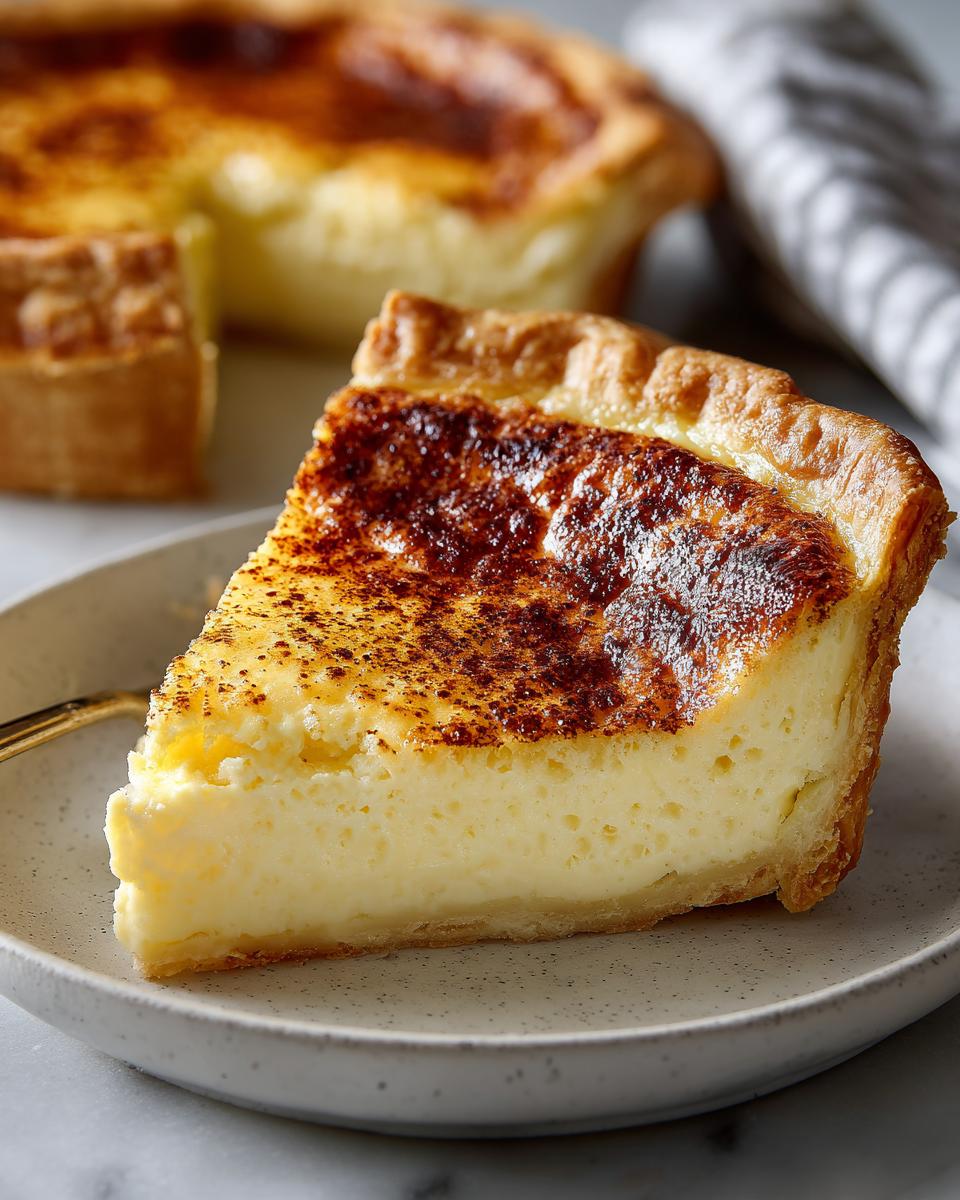
Achieving the Perfect Smooth Custard Filling
We want velvety, not scrambled, right? The magic happens when you introduce the milk slowly. Whisking the eggs, sugar, and salt together first builds structure, but you need to be gentle when adding that milk. Think of it like tempering—we don’t want sudden temperature shocks or too much fluffiness stirred in. Too much air creates bubbles that try to escape while baking, which leads right back to cracking or graininess. Keep your whisking slow and deliberate, folks!
Ingredients for Your Old Fashioned Custard Pie
Gathering your supplies for this pie is so straightforward, which is why it’s such a fantastic comfort food dessert. We are keeping things classic! You’ll need that 9-inch unbaked pie crust, three large eggs, half a cup of sugar, a splash of pure vanilla extract, and just under three cups of whole milk. Oh, and don’t forget that tiny pinch of salt to balance everything out. A little sprinkle of nutmeg on top before it goes in makes it smell incredible, too.
Notes on the Buttery Pie Crust
Since this custard pie recipe calls for an unbaked bottom crust, the secret to flakiness is keeping that dough cold right up until it hits the oven. Remember, butter loves the cold! If you’re making yours from scratch, make sure your butter is ice cold, nearly frozen, and cut into those little pea-sized pieces. That’s what creates those wonderful layers of steam that puff up into a lovely, flaky texture when baked. Don’t fuss with it too much once you press it into the plate!
How to Make Custard Pie: Step-by-Step Instructions
Okay, now for the fun part—putting it together! If you’ve followed the ingredients section, you’re ready to learn how to make custard pie that tastes just like it came from a time gone by. First things first: you absolutely must preheat that oven to 375 degrees F before you even look at your plate. We use the unbaked crust straight from the fridge, no sneaky pre-baking here!
In a medium bowl, you’re going to gently whisk your eggs, sugar, and salt. I mean it—don’t over-beat! We are mixing, not making meringue. You just want them combined until they look uniform. Next, stir in that lovely vanilla. Then, slowly start pouring in the whole milk while whisking. Once that filling is smooth as silk, pour it carefully into your crust. A little nutmeg sprinkle on top—that’s Step 7!
Baking the Custard Pie to Perfection
Pop that beauty into the preheated 375-degree oven. We keep an eye on it for 40 to 50 minutes. You’re looking for the edges of the filling to look firm—set, you know? But here’s the big secret: the middle should still have a tiny bit of a jiggle when you nudge the rack. If a knife inserted near the center comes out clean, you are golden. Resist the urge to overbake, or we risk losing that creamy texture we worked so hard for! If you want more baked dessert ideas, check out how I do my apple pie dump cake.
Tips for a No Crack Custard Filling in Your Custard Pie
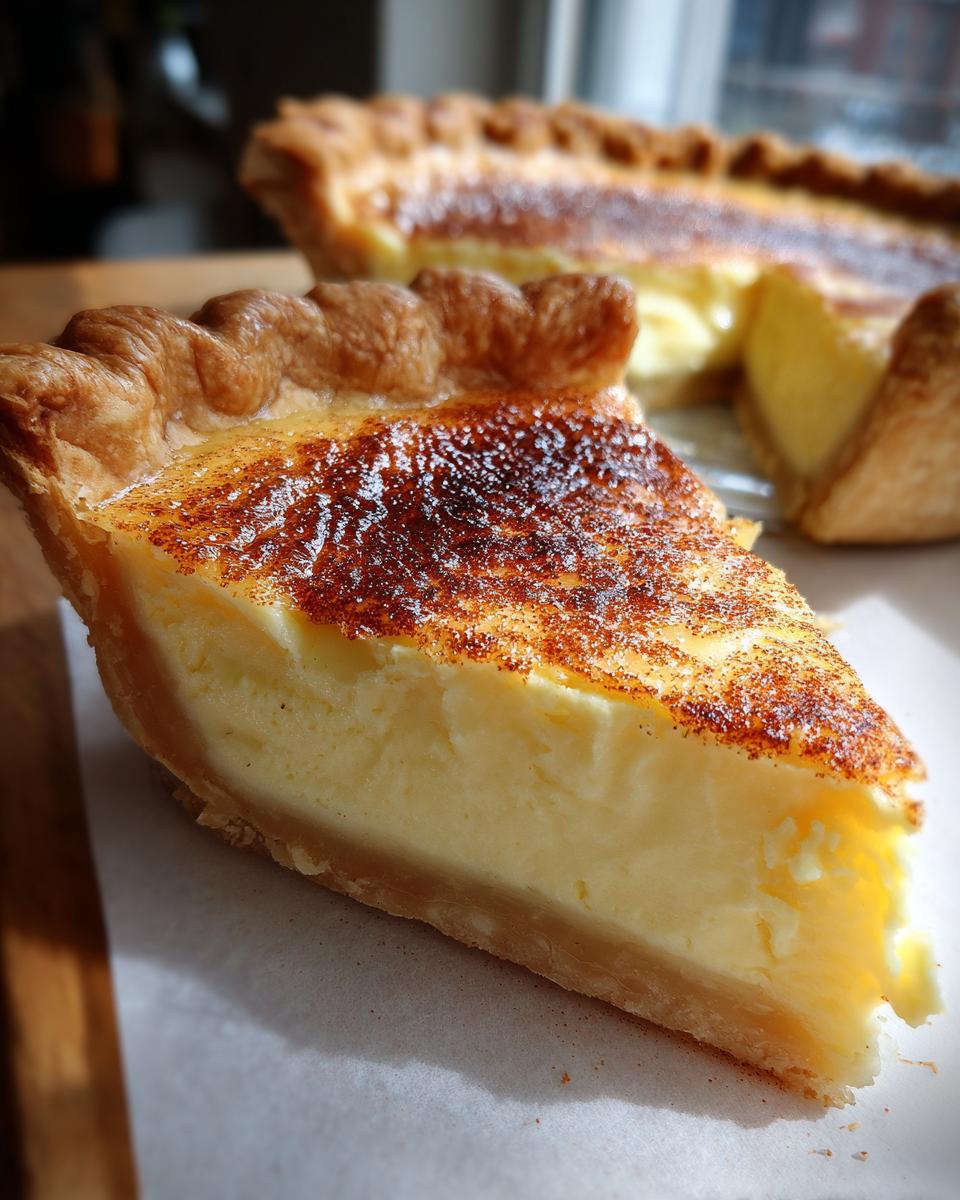
Listen, the difference between a good homemade custard pie and a *great* one lives right in that filling texture. If you’re worried about cracks—and honestly, who isn’t when baking a delicate custard—it all comes down to stirring habits. Remember I told you not to over-whisk the eggs? That’s rule number one for a no crack custard filling!
When you mix, you want to be thorough but gentle. Nobody wants a grainy texture in their easy homemade custard pie. The second crucial point is the jiggle test. Seriously, pull that pie out when the center still wobbles like perfect pudding. It’s going to set up completely as it cools down. If you bake it until it’s totally firm in the middle, you’ve overshot the landing and you’ll definitely get cracks! Trust me on the wobble; it saves the day every time.
If you want to see how someone else tackles a super creamy version, this recipe is a great option to look at: creamy custard pie.
Cooling and Serving Your Creamy Dessert Pie
You’ve baked your beautiful creamy dessert pie, but hold your horses! This is where so many people mess up the final texture. Resist the urge to slice into it right away! The custard needs time to firm up gently outside the oven—plan for at least two full hours of cooling on a rack. After that, it needs another nap in the fridge, about two more hours.
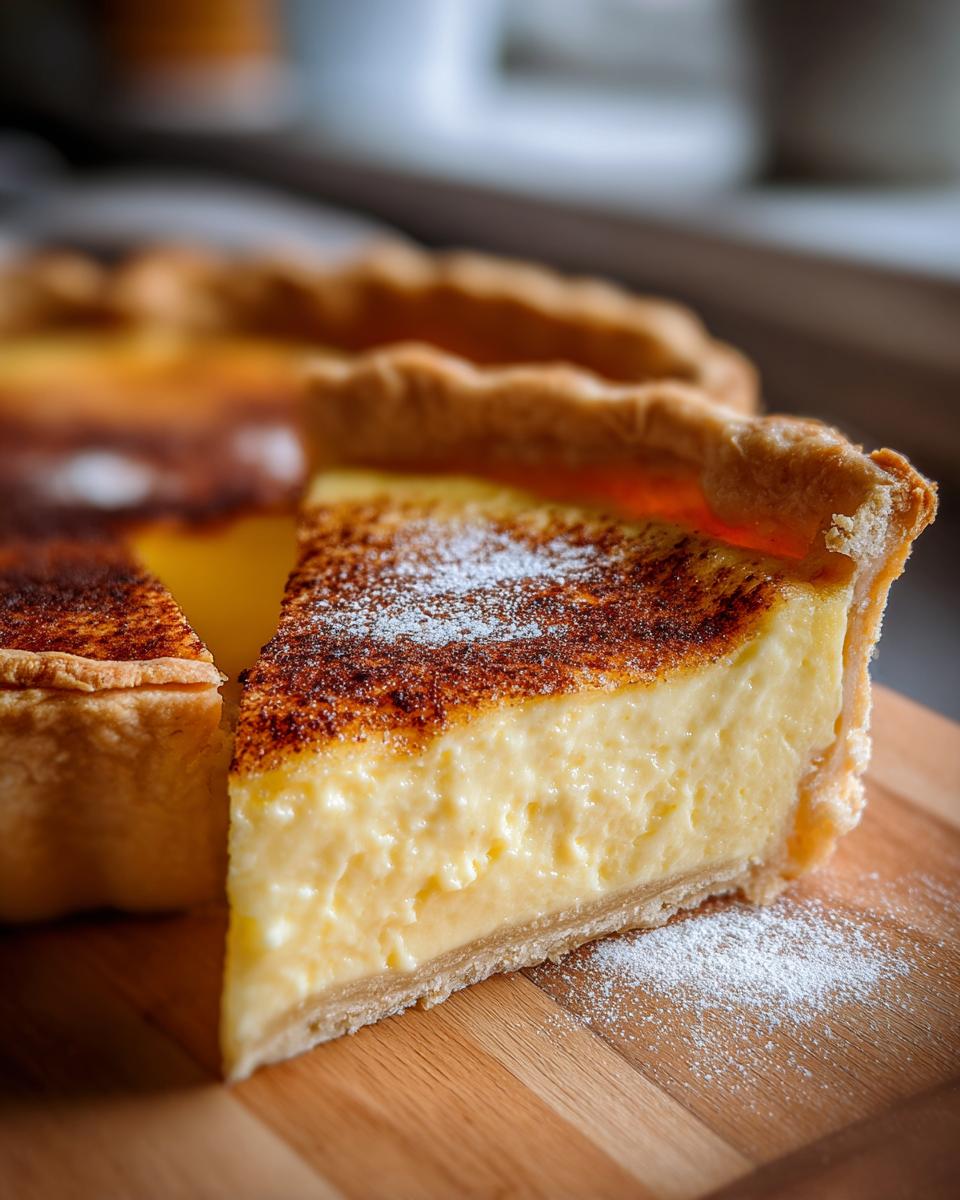
This long cooling and chilling process is non-negotiable if you want that perfect slice. This patience ensures your filling sets up beautifully and doesn’t ooze out everywhere when you finally cut that first piece.
Serving Suggestions for This Traditional Pie Recipe
Once perfectly chilled, this traditional pie recipe is wonderful just as it is, maybe with a dusting of cinnamon or a tiny dollop of fresh whipped cream. It pairs incredibly well with a strong cup of coffee or even a small glass of sherry if you’re enjoying it after a big dinner. If you’re looking for more sweet favorites, check out my collection of desserts!
Variations on the Classic Vanilla Custard Pie
While this classic Vanilla Custard Pie is perfect exactly as written, sometimes you want to switch things up a bit, right? It’s still easy to keep that signature smooth custard texture when experimenting. If you’re watching your crust intake or just don’t have a pie shell handy, try making it crustless! Just butter a baking dish well and pour that filling right in; it often bakes up a tiny bit quicker, too.
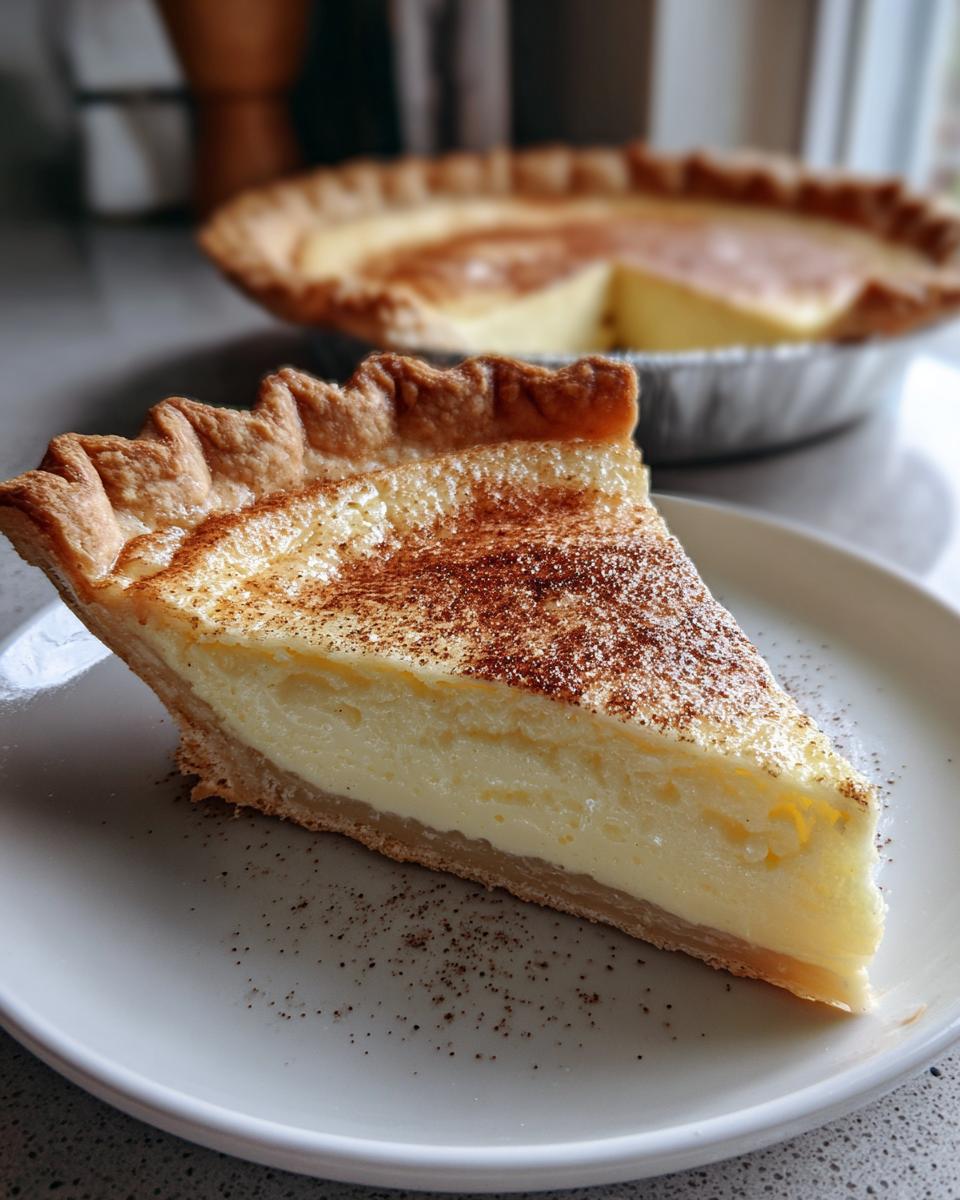
Flavor-wise, vanilla is my go-to, but you can swap that nutmeg topping for a light dusting of cinnamon or even a tiny bit of ground mace if you’re feeling fancy. You could even try a small dash of almond extract with your vanilla for a slightly different flavor profile. For other fun bakes, like these carrot banana muffins, I always encourage playing around!
Storage and Reheating Instructions for Leftover Baked Custard Dessert
So, you have some leftover slices of that glorious pie? Fantastic! Because this is an egg-based dessert, you absolutely must treat it like leftovers that spoil easily. Cover the leftover custard pie tightly with plastic wrap or put it in a sealed container right away, and tuck it into the fridge. It keeps really well for about three or four days, provided it stays cold.
Honestly, I think this pie tastes best when served cold straight from the refrigerator—that chill really firms up that creamy custard filling. If you simply must have it warm, don’t put it in the microwave! It heats unevenly and can get rubbery. Try setting a slice out on the counter for about 20 minutes instead to take the chill off.
Frequently Asked Questions About Making Egg Custard Pie
I get so many sweet notes asking about little issues when folks try this recipe for the first time. It’s totally normal! Baking can be tricky, but these little questions are easy to clear up so you get that perfect Classic Custard Pie every time you bake.
Can I substitute the milk in this custard pie recipe?
You sure can tweak things, but I have to be honest—whole milk is absolutely the key to getting that deep, lush, creamy dessert pie texture we want. If you use 2% or skim milk, your custard will be much thinner, and it won’t set up nearly as richly. Half-and-half is a great middle ground if you want something richer than whole milk, but please, try the whole milk first for that authentic flavor!
What is the best way to tell if my egg custard pie is done?
This is so vital for that smooth result! You cannot rely just on color. Watch the edges; they’ll look nice and set, usually just starting to pull slightly away from the crust. Then, carefully nudge the pie plate. If the outer ring of the custard is solid, but you see a very slight wobble—like firm Jell-O that still has some movement in the dead center—it’s done! That little bit of movement means you’ll achieve that no crack custard filling once it fully cools down. If it doesn’t wiggle at all, it’s already overdone!
If you’re looking for other simple things to serve alongside your pie, take a peek at some quick ideas for appetizers and snacks!
Share Your Simple Pie Baking Experience
Now that you’ve mastered that incredible, creamy custard pie, I would absolutely love to hear how it went! Did it come out perfectly smooth? Did the crust flake just right? Drop a comment below telling me how your experience with this simple pie baking went. If you snapped a picture of your beautiful finished dessert, please get in touch via my contact page—I always love seeing your successes!
PrintClassic Old Fashioned Creamy Egg Custard Pie

Make this classic custard pie with a smooth vanilla custard filling and a buttery, flaky crust. This simple recipe delivers a comforting dessert perfect for holidays or everyday enjoyment.
- Prep Time: 15 min
- Cook Time: 50 min
- Total Time: 1 hour 5 minutes
- Yield: 8 servings 1x
- Category: Dessert
- Method: Baking
- Cuisine: American
- Diet: Vegetarian
Ingredients
- 1 (9-inch) unbaked pie crust (homemade or store-bought)
- 3 large eggs
- 1/2 cup granulated sugar
- 1/4 teaspoon salt
- 1 teaspoon pure vanilla extract
- 1/4 teaspoon ground nutmeg (optional, for topping)
- 2 2/3 cups whole milk
Instructions
- Preheat your oven to 375 degrees F (190 degrees C). Place the unbaked pie crust into a 9-inch pie plate. Do not pre-bake the crust.
- In a medium bowl, whisk together the eggs, sugar, and salt until they are well combined. Do not over-beat; you want to avoid incorporating too much air, which can cause cracking.
- Stir in the vanilla extract.
- Slowly whisk in the whole milk until the mixture is smooth.
- Pour the custard filling carefully into the unbaked pie crust.
- Sprinkle the top lightly with ground nutmeg, if using.
- Bake for 40 to 50 minutes. The pie is done when a knife inserted near the center comes out clean, and the edges of the custard are set. The center should still have a slight jiggle.
- Cool the pie completely on a wire rack for at least 2 hours before slicing. This cooling time helps the custard set fully and prevents a runny filling.
- Chill the pie for an additional 2 hours before serving for the best texture.
Notes
- To prevent a cracked top, do not over-whisk the eggs, and bake the pie until just set. A slight wobble in the center is correct.
- For a flaky pie crust, keep all ingredients cold when preparing it from scratch.
- If you want a crustless custard pie, pour the filling into a buttered baking dish and bake for about 45 minutes at 350 degrees F (175 degrees C).
- Use whole milk for the creamiest texture in your smooth custard filling.
Nutrition
- Serving Size: 1 slice
- Calories: 250
- Sugar: 18g
- Sodium: 180mg
- Fat: 12g
- Saturated Fat: 6g
- Unsaturated Fat: 6g
- Trans Fat: 0.2g
- Carbohydrates: 25g
- Fiber: 1g
- Protein: 9g
- Cholesterol: 95mg