Foolproof Method: How to Make Perfect Sushi Rice (Stovetop & Rice Cooker Variations)
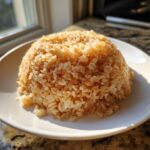
Learn the simple steps to create restaurant-quality sushi rice at home. This recipe delivers the perfect sticky and fluffy texture, seasoned correctly for homemade maki rolls or poke bowls.
- Prep Time: 15 min
- Cook Time: 25 min
- Total Time: 50 min
- Yield: 4 servings 1x
- Category: Side Dish
- Method: Stovetop/Rice Cooker
- Cuisine: Japanese
- Diet: Vegetarian
Ingredients
Scale
- 2 cups short-grain Japanese rice (or rice labeled for sushi)
- 2 cups cold water (for cooking)
- 1/2 cup Japanese rice vinegar
- 3 tablespoons granulated white sugar
- 1 teaspoon fine sea salt
Instructions
- Measure the rice into a fine-mesh sieve or bowl. Rinse the rice under cold running water, swirling gently with your hand until the water runs mostly clear. This removes excess starch. Drain the rice completely.
- Combine the rinsed rice and 2 cups of cold water in a heavy-bottomed saucepan with a tight-fitting lid (or in your rice cooker pot).
- If using the stovetop: Bring the water and rice to a boil over medium-high heat. Once boiling, immediately reduce the heat to the lowest setting, cover the pot, and simmer for 15 minutes without lifting the lid.
- If using a rice cooker: Follow your appliance’s standard instructions for cooking short-grain white rice.
- After 15 minutes (stovetop), remove the pot from the heat. Let it stand, covered, for another 10 minutes. Do not lift the lid during this resting period.
- While the rice rests, prepare the seasoning. In a small saucepan, combine the rice vinegar, sugar, and salt. Heat gently over low heat, stirring until the sugar and salt fully dissolve. Do not boil the mixture. Remove from heat and let it cool slightly. This is your sushi rice seasoning.
- Transfer the cooked rice to a large, non-metallic bowl (wood or glass is best). The rice should be warm, not piping hot.
- Pour the prepared vinegar mixture evenly over the warm rice.
- Using a rice paddle or wooden spoon, gently ‘slice’ and fold the rice to incorporate the seasoning. Do not stir or mash the grains; this breaks them down and makes the rice mushy. The goal is to coat every grain while incorporating air to cool it quickly.
- Continue folding and fanning the rice (using a hand fan or piece of cardboard helps cool it faster) until it reaches room temperature. The rice should look glossy, slightly sticky, and individual grains should remain distinct.
- Use immediately for sushi rolls, nigiri preparation, or serve as a side dish for poke bowls.
Notes
- Always use short-grain Japanese rice; long-grain rice will not achieve the correct sticky texture for sushi.
- The rice washing technique is crucial; clear water means less starch, resulting in fluffier, less gummy rice.
- If you are making rice for nigiri, handle the seasoned rice gently to maintain its structure.
- For a rice cooker tutorial, follow the standard white rice setting after washing and adding water.
Nutrition
- Serving Size: 1 cup cooked
- Calories: 250
- Sugar: 8
- Sodium: 280
- Fat: 0.5
- Saturated Fat: 0.1
- Unsaturated Fat: 0.4
- Trans Fat: 0
- Carbohydrates: 55
- Fiber: 1
- Protein: 5
- Cholesterol: 0
Find it online: https://tastethisplate.com/perfect-sushi-rice-recipe/