

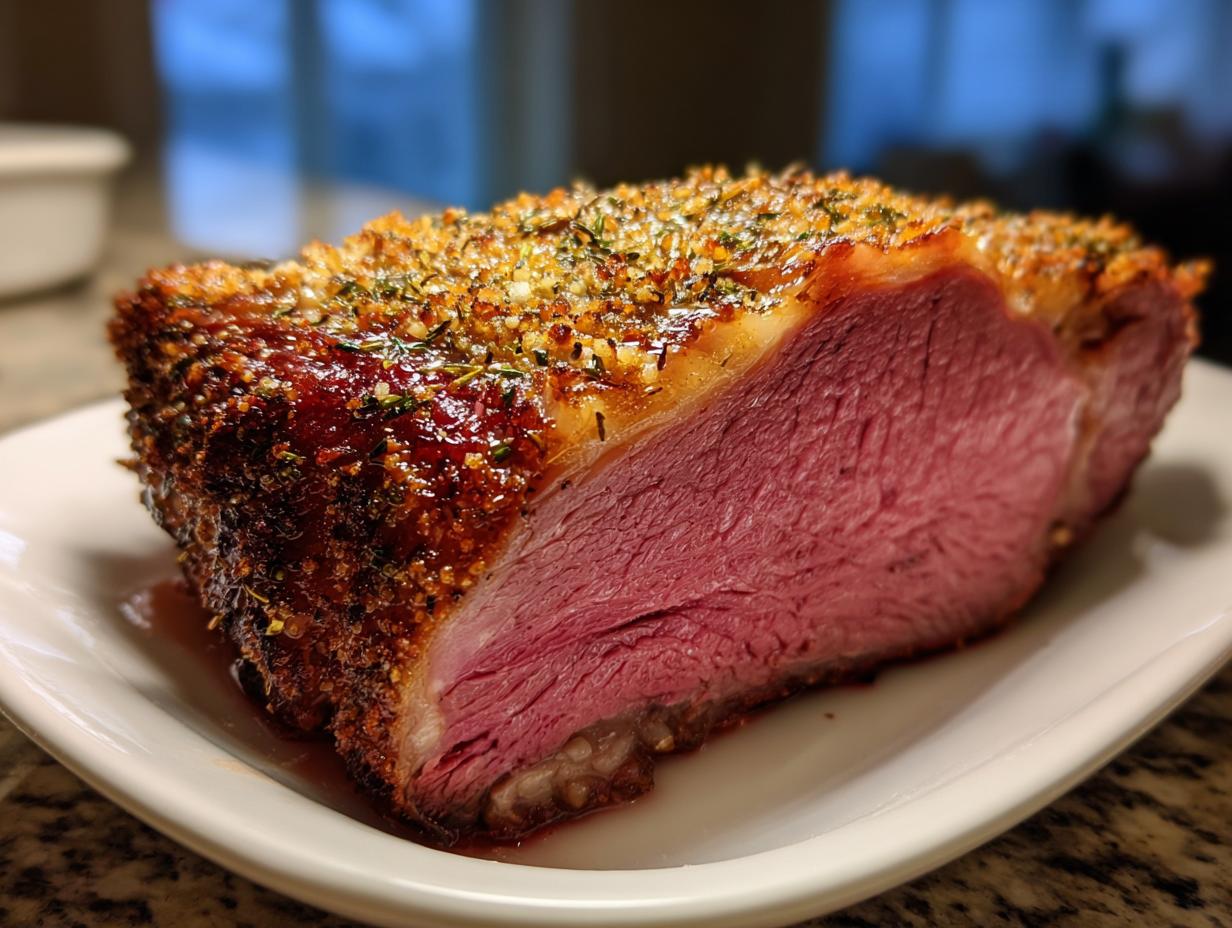
Okay, let’s be completely honest. Cooking the main dish for a big holiday—whether it’s Christmas or just a really important Sunday dinner—can feel like balancing on a tightrope while juggling flaming torches. If you’re making a roast like this gorgeous **prime rib**, the pressure is intense! You want that perfect, juicy center and that amazing crust, but the fear of serving dry, sad beef keeps so many people away from this legendary cut.
That’s exactly why I spent an embarrassing amount of time in my kitchen breaking down how the big restaurant chains get their roasts so tender. I’m Kate, and I love taking those intimidating, classic recipes and turning them into something you can absolutely nail on your first try. We’re ditching the guesswork here. We’re using the reverse sear method, which sounds fancy but is really just a genius way of saying, “cook it low and slow for ultimate tenderness, then blast it hot for the crust.” Trust me, this foolproof recipe guarantees you a melt-in-your-mouth experience every single time.
- Why This Reverse Sear Prime Rib Recipe Guarantees Success (The Best Prime Rib Recipe)
- Essential Ingredients for Your Herb Crusted Prime Rib
- How to Prepare the Prime Rib: The Foolproof Oven Method
- Expert Tips for Your Slow Roasted Prime Rib
- Serving Suggestions: Pairing Your Prime Rib with Horseradish Sauce
- Storage and Reheating Instructions for Leftover Prime Rib
- Frequently Asked Questions About Cooking Prime Rib
- Share Your Restaurant Quality Prime Rib at Home Experience
- Estimated Nutritional Data for This Prime Rib
Why This Reverse Sear Prime Rib Recipe Guarantees Success (The Best Prime Rib Recipe)
Look, when you invest in a gorgeous cut like prime rib, you need a method that works. That’s why I swear by the reverse sear. It flips the traditional method upside down! Instead of searing hot first and hoping the inside catches up, we start low and slow in the oven. Cooking it gently until it’s nearly done means the heat penetrates evenly, resulting in beautiful edge-to-edge pinkness. No more gray bands, folks!
This technique transforms a pricey roast into a Melt in Your Mouth Beef Roast without stressing you out. It’s honestly what makes this the Best Prime Rib Recipe I’ve ever tested in my normal, non-professional kitchen. You get professional results with beginner effort.
- Guaranteed Juiciness: The low temperature mimics professional cooking, locking in all those beautiful beef juices.
- Superior Crust: Save the high heat for the very end! This allows the exterior seasoning to form a perfect, flavorful shell.
- Simple Timing: It’s much easier to pull a roast when it’s one specific temperature rather than worrying about oven chaos.
Achieving Perfect Prime Rib Temperature Every Time
If you take one thing away from this whole guide, let it be this: use a reliable meat thermometer! This is the single most important tool for hitting that Perfect Prime Rib Temperature. Don’t guess, don’t stare at the clock and pray. We are slow-roasting until the very center of that roast hits about 115°F. That’s the sweet spot before the final sear. Once you hit that number, you pull it out, let it rest briefly while the oven heats up, and then we sear until it’s perfect. It just takes the guesswork right out of the holiday meal!
If you want to see how I handle a super flavorful cut like that beef in my beef and bowtie pasta rolls, the precision is similar—it’s all about temperature control!
Essential Ingredients for Your Herb Crusted Prime Rib
This is where we build the foundation for that incredible, flavorful exterior. Remember how I told you we focus on accessible ingredients here at the site? That’s true even for a showstopper like this! You don’t need any fancy imported spices—just good quality basics treated right. For this recipe, we are using the bone-in cut because, honestly, the bones help insulate the meat and that little bit of extra flavor radiating off the bone is fantastic. But don’t worry, I’ll tell you if you can swap it later!
Here is exactly what you need for a 5 to 7 pound roast:
- 1 (5-7 lb) bone-in prime rib roast, tied
- 2 tablespoons coarse kosher salt
- 1 tablespoon black pepper (freshly cracked is best, if you have it!)
- 1 tablespoon garlic powder
- 1 tablespoon dried rosemary
- 1 tablespoon dried thyme
- 1/4 cup Dijon mustard
- 2 tablespoons olive oil
- 1 cup beef broth (for moisture in the pan)
Ingredient Notes and Substitutions for This Prime Rib
Let’s talk specifics because the quality of these few ingredients really matters when you’re only using oven heat to cook it.
First off, the meat itself. We are using bone-in prime rib roast here because it’s traditional and I find it cooks just a hair more gently around the edges. If you only find a boneless cut, that’s totally fine—it will just cook a little faster, so keep that thermometer handy! Just know that the bone acts like a little heater and insulator, which is nice.
Next up: Salt! Please, please, please use coarse kosher salt here. Table salt is too fine and aggressive; it can make the rub too salty in spots. The course grains dissolve slowly and season the roast beautifully over that long, slow cooking time. If you only have flaky sea salt, that works too, but definitely avoid standard iodized table salt for this rub.
The role of the Dijon mustard and olive oil is crucial. They aren’t for flavor as much as they are acting as the glue. The mustard is a fantastic binder that helps that herbal crust stick firmly to the beef without sliding off during roasting. The olive oil just makes sure everything spreads evenly! Don’t skip them!
How to Prepare the Prime Rib: The Foolproof Oven Method
This is it—the part where all that prep pays off. The beauty of this Foolproof Prime Rib Oven Method is that it takes concentration out of the equation for a few hours, letting you hang out until the crucial moment. Just remember the core idea: low and slow first, then blast it hot! Don’t touch the temperature until we tell you to.
When you are ready, make sure you have your roasting rack and pan handy, and that your meat thermometer is calibrated. This sequence is what keeps your beef unbelievably moist. Seriously, this is how you ensure you get that Juicy Tender Roast Beef outcome we are aiming for.
Step 1: Tempering and Seasoning the Prime Rib
Right off the bat, pull that beautiful hunk of meat out of the fridge two or three hours early. We need it to come up to room temperature, or temper, so it cooks more evenly. Once it’s tempered, grab some paper towels and pat the entire exterior bone-in prime rib roast absolutely dry. I mean bone dry! If you skip this, your crust will steam instead of sear later, and we don’t want that.
Now for the glue: brush that Dijon mustard all over every exposed surface. Don’t worry, you won’t taste it much in the end, it’s just a wonderful adhesive. Then, take that amazing herb rub we mixed earlier and pile it on! Really press it into the mustard coating so it grabs hold. I like to use my hands and give it a firm massage all over.
Step 2: Slow Roasting for a Juicy Tender Roast Beef
Preheat your oven to a nice, gentle 250°F (120°C). Place the seasoned roast, fat side up, on the rack in your roasting pan. I always toss a cup of beef broth into the bottom of the pan. It’s not for baste water; it just creates steam down low to keep the oven environment slightly humid. This helps prevent the outside edges from drying out while the inside slowly cooks.
Slide it in and let it go. You are looking for the internal temperature to hit 115°F for medium-rare. This will take hours—maybe three, maybe five, depending on how big your roast is. It’s the most hands-off part, but you must check that temperature every hour or so in the thickest part!
If you want to check out how I handle a different kind of roast, like that maple mustard pork tenderloin, the slow cooking element makes it tender too!
Step 3: The High-Heat Sear for the Perfect Crust
When that thermometer reads 115°F, you pull it out. Seriously, pull it out! Let it sit on the counter, loosely tented with foil, for about 15 minutes while the oven does its big transformation. Crank that heat way up, all the way to 500°F (260°C). This is the moment of truth!
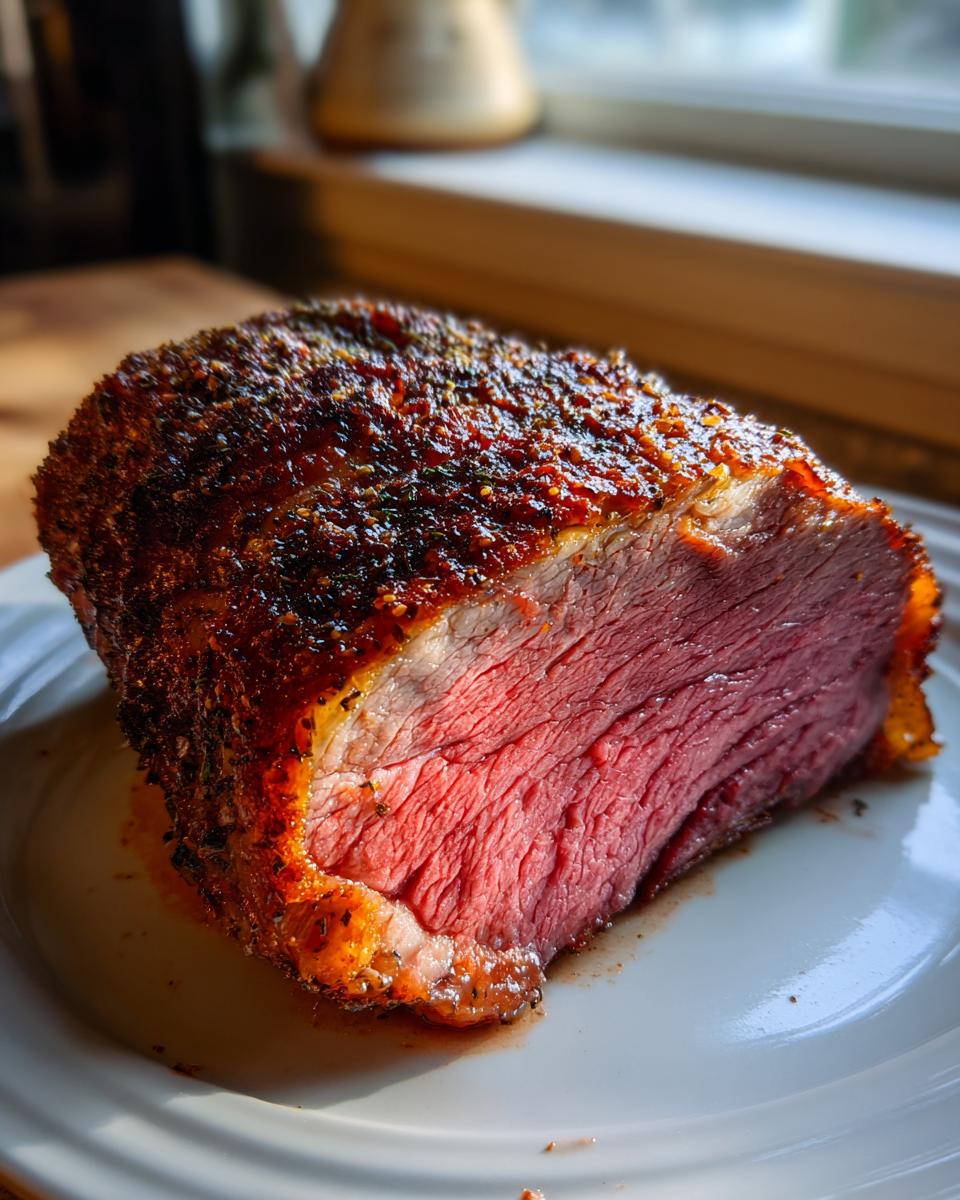
Carefully place the roast back in the super hot oven. Now, you’re just searing. Set your timer for 8 minutes and watch it like a hawk! You want it dark golden brown and crisp where the herbs meet the meat. If it starts to look like it might burn before 8 minutes, pull it out! We aren’t trying to cook it through here; we’re just finishing that crust. Once you hit that deep color, take the prime rib out for the final mandatory rest before you even think about slicing.
For more holiday inspiration on crusts and rubs, take a peek at this great recipe from Amelia’s kitchen on herb-crusted prime rib!
Expert Tips for Your Slow Roasted Prime Rib
Honestly, even though the reverse sear method is incredibly straightforward—and that’s the point!—a couple of little secrets can take your Slow Roasted Prime Rib from great to absolutely legendary. My philosophy here is always the same: do the hard work upfront so you can relax when your guests arrive. These tips come straight from my testing files when I was trying to replicate that perfect restaurant texture.
If you’re planning way ahead of time, I highly recommend trying the overnight dry brine. It sounds intense, but it’s just seasoning the roast the night before and leaving it uncovered in the fridge. The salt works its way in deeper, and that open air exposure helps dry out the surface even more. When you go to cook it the next day, you get a crust that’s just unbelievable. It’s one of those things that adds maximum flavor with the least amount of active work!
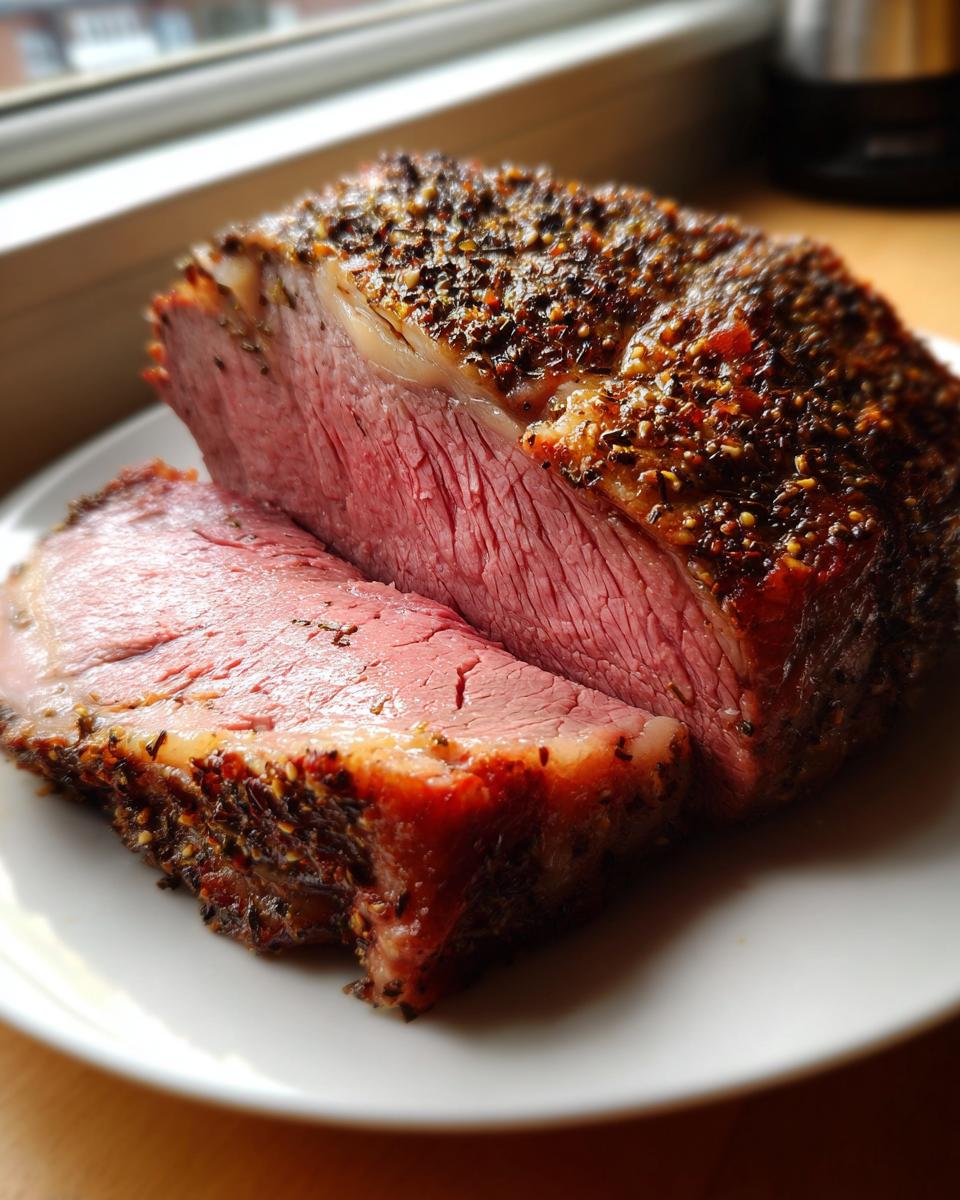
Also, let’s talk about the temperature one more time. I know it’s tempting to crank the oven up early because you’re running behind schedule, but please resist! The magic of this Slow Roasted Prime Rib relies on that patient, low 250°F heat. I learned the hard way trying to rush a recipe once—it resulted in a roast that was perfectly cooked on the outside and still cold in the middle. We managed to save it, but oh, the stress! If you check out this recipe for melt-in-your-mouth prime rib, you’ll see they also emphasize starting low, because consistency is everything.
Finally, always, always use your thermometer as the guide, not the clock. The weight and shape of every roast is different. That’s why my notes always stress using a reliable meat thermometer to gauge doneness. Visual cues are fun for checking vegetables, but for a centerpiece like this, we need precision. Once you nail the initial temperature, give it that short rest before searing. It’s non-negotiable for flavor retention. If you love making things ahead of time, you should check out how I prep my homemade granola the day before, too!
Serving Suggestions: Pairing Your Prime Rib with Horseradish Sauce
Okay, the magnificent prime rib is rested, sliced thin, and sitting beautifully on the platter—but you can’t serve this masterpiece naked! It really deserves a punchy, creamy sauce to cut through all that richness. If you’re aiming for that authentic, amazing flavor experience, you absolutely need a tangy counterpoint. This is where our simple version of Prime Rib with Horseradish Sauce comes into play. You seriously won’t believe how easy it is to whip up something so much better than anything out of a jar!
Forget grabbing the stuff with the scary stabilizers from the shelf. We’re making a quick, fresh cream sauce. You just need a good dollop of prepared horseradish (check the refrigerated section in the dairy aisle, not the typical condiment rack!) mixed into cool sour cream, maybe some Greek yogurt if you want it tangier, and just a tiny splash of vinegar, like red wine vinegar, to wake it up. A pinch of salt, a little black pepper, and you are done. It takes maybe three minutes, and it tastes incredible spooned right over the roast beef.
Ideal Side Dishes for Your Holiday Roast Centerpiece
Since this prime rib is the undeniable star of the show—the ultimate Holiday Roast Centerpiece—the sides need to complement it without stealing focus. Keep things classic, comforting, and easy to manage while you’re dealing with that final oven sear! We want things that soak up those amazing pan drippings, too.
For my table, I always aim for richness and texture:
- Creamy Mashed Potatoes: You need something fluffy to nestle the slices into. If you want to see how I make mine super garlicky, check out my garlic parmesan mashed potatoes recipe! They vanish instantly.
- Simple Roasted Asparagus or Green Beans: Tossed with olive oil, salt, and pepper, these roast right up alongside everything else. They give you that necessary bit of green crunch to balance the heavy beef and potatoes.
- Yorkshire Puddings (If you’re feeling adventurous!): If you want the full wow factor for your Christmas Dinner Main Dish, these are magic. They puff up enormous in the oven and are perfect for soaking up the au jus.
If you like dipping things in cool, creamy sauces, you might also enjoy the refreshing tang of my homemade tzatziki sauce, though for prime rib, the horseradish version is king!
Storage and Reheating Instructions for Leftover Prime Rib
So, you managed to have leftovers—which, let’s face it, is a victory in itself when you cook a prized cut of meat! Don’t let that amazing roast beef go to waste. The key to storing leftovers is being gentle with it and keeping it away from dry air. You want to make sure that hard-earned richness we locked in stays put!
First things first: wait until the meat is completely cool before you put it away. Trying to chill hot meat speeds up condensation, which leads to soggy beef. Once cool, slice up whatever pieces you want to store—it’s easier to manage smaller portions later. Wrap the slices tightly in plastic wrap first, squeezing out as much air as possible. Then, put those wrapped portions into a high-quality, airtight storage container. If you do this right, your prime rib should stay wonderfully fresh for about three to four days tucked away in the fridge.
Now, reheating is where people often make mistakes, turning that melt-in-your-mouth texture into shoe leather. You absolutely cannot blast it in the microwave or throw it back in a 400-degree oven, or you’ll undo all that hard work we did with the reverse sear! We need to reintroduce moisture gently.
The absolute best way to reheat is low and slow, just like we cooked it, maybe even lower. Set your oven to just 275°F (135°C). Place your sliced prime rib in an oven-safe dish. Here’s the secret: pour a tiny bit of liquid into the bottom of the dish. This could be beef broth, or even just water! Cover that dish tightly with foil—a double layer works great. This creates a little steam bath inside the dish that warms the meat without drying it out.
Heat it until it’s just warm through. For thin slices, this might only take 10 to 15 minutes. You want it hot enough to serve, but definitely not sizzling hot. If you’re planning on making something like steak sandwiches or just enjoying cold slices, you don’t even need to reheat it! Cold prime rib is phenomenal on sandwiches, especially paired with the leftovers of that amazing horseradish cream sauce we made.
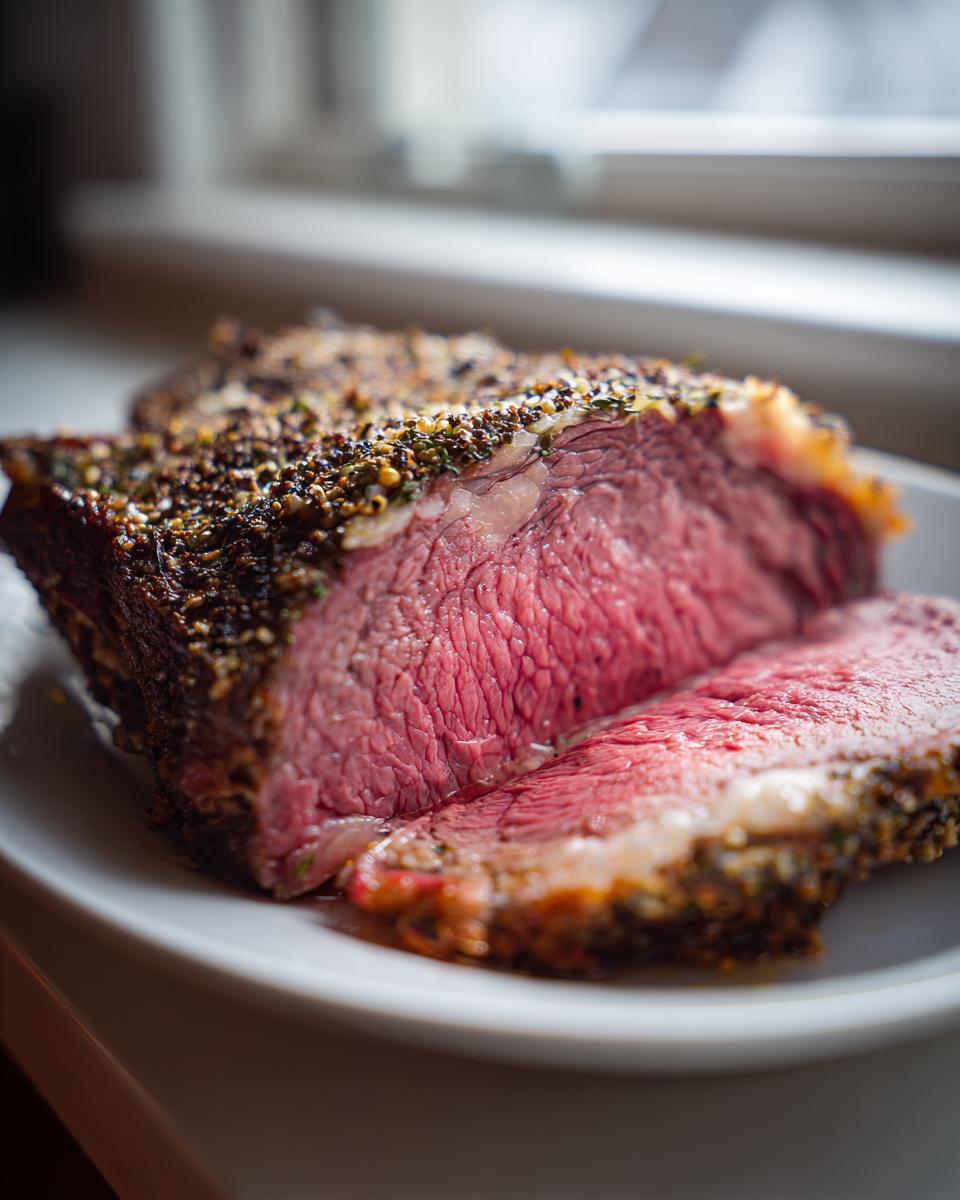
If you need some great ideas for using up any leftover mashed potatoes—we all know there are always leftover garlic parmesan mashed potatoes after a big roast—or if you’re just looking for simple weeknight dinner ideas using up ingredients, we have tons of ways to repurpose delicious leftovers all over the site!
Frequently Asked Questions About Cooking Prime Rib
I know sometimes even with the clearest instructions, you just have a few nagging questions buzzing around your head before you commit to cooking something this important. That’s totally normal! I’ve answered the ones I get asked the most, focusing on making sure this turns out to be the best roast beef you’ve ever made.
Can I use a Boneless Prime Rib Recipe instead?
Yes, absolutely you can! The beauty of the reverse sear is that it works for both cuts. The main thing you need to know about swapping to a Boneless Prime Rib Recipe is that it will cook faster since there’s no bone insulation. You’ll need to start checking the internal temperature sooner, maybe an hour earlier than estimates suggest for a bone-in cut of the same weight. You should still follow the exact same temperature targets—pull it at 115°F for the slow roast phase, then sear at 500°F. If you were hoping to try out some amazing pasta with the leftovers, like my beef garlic butter linguine, you’ll just need to adjust your cooking time!
How long should I rest my prime rib after cooking?
This is where many people panic and cut too soon, ruining all the hard work! You absolutely must rest your roast beef for a minimum of 20 minutes after you pull it out of the high-heat sear. I aim for 25 minutes if I can get away with it, loosely tented with foil. Resting is non-negotiable because those internal juices, which have been pushed toward the center by the heat, need time to redistribute peacefully back throughout the meat fibers. If you slice immediately, all that moisture—the very thing we worked so hard to keep—runs right onto the cutting board, leaving you with dry meat. Trust me, waiting those 20 minutes ensures the tenderest experience possible!
If these questions have you feeling confident, you should absolutely check out more advanced insights on nailing the perfect roast finish found over at Kitchen Confide!
Share Your Restaurant Quality Prime Rib at Home Experience
So there you have it! We’ve taken a big, gorgeous, intimidating cut of meat and conquered it using the low-and-slow reverse sear method. I truly hope this guide has taken away any fear you had about making your own Restaurant Quality Prime Rib at Home. Whether this was for a massive Christmas dinner or just a spectacular Sunday Supper, I want to know how it went for you!
Did that herb crust get perfectly crisp? Did those slices look rosy and uniform all the way through? Please don’t be shy! Leave a comment below and tell me which internal temperature you landed on. I absolutely love seeing your successes; it’s the greatest compliment you can give me after I’ve spent hours testing these methods to make sure they work in *your* kitchen.
If you took pictures of that beautiful centerpiece on the table, please tag me on social media! Seeing your creations is honestly the best part of my job here at Taste This Plate.
And hey, if you’re looking for an incredibly refreshing drink to pair with such a rich roast—maybe something fizzy to cut through the richness—you should check out my recipe for sparkling honey lemonade soda! It’s the perfect palate cleanser after a big meal.
Happy cooking, everyone. Now go enjoy that perfectly cooked roast beef!
Estimated Nutritional Data for This Prime Rib
Now, this next part is super important, but I need you to keep one thing in mind: this is just an estimate! When you’re cooking a huge cut of meat like this, nutrition labels are tricky because it depends heavily on how much fat renders away during the slow roast and exactly how much of that gorgeous herb crust you manage to keep on your slice. We calculated this based on the ingredient list provided up top for a standard 6-ounce serving after cooking.
We always aim for simple ingredients over here, so the numbers aren’t scary, but remember, this is a rich meal, meant for special occasions!
Based on the ingredients and a 6-ounce portion size (which is a good hearty serving for a main holiday roast), here are the approximate numbers based on the data I ran:
- Calories: Around 450 per serving. Given how much fat is in prime rib, this isn’t a shocker, but wow, the flavor is worth it!
- Protein: High! We’re looking at about 40 grams, so this roast will keep you full for ages.
- Fat: Roughly 30 grams. Remember, a good chunk of that is healthy fat that helps keep the meat unbelievably juicy.
- Carbohydrates: Very low, usually just 1 gram, since we aren’t adding sugars or flour into the meat mixture itself.
As always, these figures are guides. If you trim off a lot of the exterior fat before you eat it, your fat and calorie count will drop immediately. But honestly, if you nail that crust with this reverse sear prime rib recipe, I recommend eating the whole bite! It’s what makes the meal special.
PrintFoolproof Reverse Sear Prime Rib Recipe: Juicy, Tender, with a Perfect Herb Crust
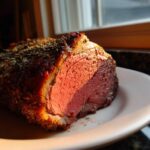
Make a restaurant-quality prime rib roast at home using the reverse sear method. This guide ensures a juicy, tender result with a flavorful, crisp herb crust, perfect for your next holiday dinner or special occasion.
- Prep Time: 20 min
- Cook Time: 4 hours
- Total Time: 4 hours 20 min
- Yield: 6 servings 1x
- Category: Main Dish
- Method: Roasting
- Cuisine: American
- Diet: Low Calorie
Ingredients
- 1 (5-7 lb) bone-in prime rib roast, tied
- 2 tablespoons coarse kosher salt
- 1 tablespoon black pepper
- 1 tablespoon garlic powder
- 1 tablespoon dried rosemary
- 1 tablespoon dried thyme
- 1/4 cup Dijon mustard
- 2 tablespoons olive oil
- 1 cup beef broth (for pan)
Instructions
- Remove the prime rib from the refrigerator 2 to 3 hours before cooking to let it come closer to room temperature.
- Preheat your oven to 250°F (120°C). This is the slow-roast phase.
- In a small bowl, combine the kosher salt, pepper, garlic powder, rosemary, and thyme to create the dry rub.
- Pat the entire roast dry with paper towels. Rub the Dijon mustard evenly over the entire surface of the beef.
- Sprinkle the herb and spice rub generously over the mustard coating. Press the seasoning onto the meat so it adheres well.
- Place the roast, fat-side up, on a rack set inside a roasting pan. Pour the beef broth into the bottom of the roasting pan (this helps keep the oven moist).
- Roast slowly until the internal temperature reaches 115°F (46°C) for medium-rare. This can take 3 to 5 hours depending on the size of your roast. Use a meat thermometer inserted into the thickest part of the meat, avoiding bone.
- Once the target internal temperature is reached, remove the roast from the oven. Let it rest for 15 minutes while you increase the oven temperature to 500°F (260°C).
- Place the roast back into the 500°F (260°C) oven. Sear for 8 to 10 minutes, or until the exterior crust is deep brown and crisp. Watch closely to prevent burning.
- Remove the prime rib from the oven. Tent loosely with foil and let it rest for at least 20 minutes before slicing. The internal temperature will rise to your desired final temperature (around 130°F for medium-rare).
- Slice against the grain and serve immediately with pan drippings or horseradish cream.
Notes
- For the best crust and flavor, consider dry-brining the seasoned roast uncovered in the refrigerator overnight.
- Always use a reliable meat thermometer to gauge doneness; visual cues are not dependable for large roasts.
- If you prefer a bone-in prime rib roast, cooking time may increase slightly.
Nutrition
- Serving Size: 6 oz cooked
- Calories: 450
- Sugar: 0
- Sodium: 450
- Fat: 30
- Saturated Fat: 12
- Unsaturated Fat: 18
- Trans Fat: 0
- Carbohydrates: 1
- Fiber: 0
- Protein: 40
- Cholesterol: 140